

Login or Subscribe
You must be logged in to access this content
Subscribe for free access to Japanese Exotic Mushroom Journal and gain insider knowledge on effective cultivation methods for Japanese mushroom species. Elevate your skills with expert tips and innovative technologies to master the art of growing Japanese exotic mushrooms.
◆ Discover exclusive Japanese mushroom cultivation techniques
◆ Learn innovative methods to enhance mushroom quality and yield
◆ Tap into Japan's rich heritage for unique growing insights
◆ Discover exclusive Japanese mushroom cultivation techniques
◆ Learn innovative methods to enhance mushroom quality and yield
◆ Tap into Japan's rich heritage for unique growing insights
Subscribe Now for Free Login
Suppression of plant diseases by reductive soil disinfestation using spent mushroom substrate of Flammulina velutipes
- SAITO Suzuna¹, TANAKA Yoko², KAWATA Kumiko², YONEMURA Yoshitaka², KOBAYASHI Tetsuya³, ISHIHARA Atsushi⁴, and OSAKI-OKA Kumiko⁴¹ Graduate School of Sustainability Science, Tottori University, 4-101 Koyama-cho Minami, Tottori 680-8553, Japan
² Tottori Horticultural Experiment Station, 2048 Hokuei-cho Yurashuku, Tottori 689-2221, Japan
³ Japanese Agricultural Cooperatives of Nakano-shi, 1-2-8 Miyoshi-cho, Nakano, Nagano 383-0043, Japan
⁴ Faculty of Agriculture, Tottori University, 4-101 Koyama-cho Minami, Tottori 680-8553, Japan - Abstract
Mushroom production by bed cultivation generates large amounts of spent mushroom substrate (SMS), posing a major challenge for the industry in terms of the cost-effective disposal of SMS. This study explores the potential of utilising SMS as an organic material for reductive soil disinfestation (RSD). RSD treatment using SMS derived from the cultivation of Flammulina velutipes, Lentinula edodes, and Hypsizygus marmoreus effectively induced soil reduction. RSD using F. velutipes SMS resulted in significantly decreased offensive odours as compared to RSD using wheat bran, a typical organic material used for RSD. It also effectively decreased the densities of soil-borne pathogens such as Ralstonia solanacearum, Fusarium oxysporum f.sp. lagenariae, and Fusarium oxysporum f.sp. spinaciae in contaminated soils. In field experiments with contaminated soils, RSD treatment using F. velutipes SMS delayed the development of bacterial wilt in tomato own-root seedlings and suppressed the disease in grafted tomato seedlings. In addition, Fusarium wilt was significantly suppressed in spinach seedlings cultivated in RSD-treated soil. This study shows that SMS is a promising organic material for RSD, offering effective control of soil-borne plant diseases.
Key words: Reductive soil disinfestation, Spent mushroom substrate, Soil-borne plant diseases - IntroductionIn field cultivation, including that of vegetables, the use of production systems based on repeated cultivation of the same crop is common, increasing the likelihood of outbreaks of soil-borne diseases. Methyl bromide soil fumigants have been widely used as a means to eliminate soil-borne pathogens, including fungi and bacteria, as well as disease-causing nematodes. Methyl bromide, however, was designated as an ozone-depleting substance in the 1992 Montreal Protocol1), and its use in Japan was completely stopped from 20122). As such, there was a need for a new soil sterilisation technology that could replace soil fumigation using methyl bromide, with the development of reductive soil disinfestation (RSD) as a technology combining soil solarisation and flooding3). RSD is a method that produces a reductive soil environment through mixing easily decomposable organic matter (referred to as RSD materials) into the soil, creating a flooded soil state, covering the soil with plastic, and allowing the soil to heat up through sunlight4). In the process of raising the soil temperature and producing reductive soil conditions, the density of soil-borne pathogens decreases. The mechanism for this technology has not been completely explained, but it is thought that soil-borne pathogens are killed through the accumulation of organic acids and metal ions (e.g. Fe2 and Mn2 ), produced as a result of the reductive environment caused by reducing the level of oxygen in the soil4). Wheat or rice bran are generally used as RSD materials, making it a sterilisation technology that has a low impact on the health of growers through, for example, pesticide drift, or on the environment due to it being a material and cultural method of pest control that does not make use of chemical agents. Suppression through RSD using wheat bran of various types of plant pathogens - including Fusarium oxysporum, Phomopsis sclerotioides, Phytophthora capsici, and Monosporascus cannonballus - as well as nematodes and weeds has been previously reported2). Disadvantages of the method include the difficulty of removing pathogens that live in deeper soil levels such as bacterial wilt Ralstonia soranacearum, due to the fact that sterilisation cannot be accomplished in deep soil levels for RSD using wheat straw or wheat bran5)6), and the unsuitability of using the method in built-up areas, due to the production of foul odours (`drain` smells) from soil that has been reduced4). As measures to deal with pathogens that penetrate into deep soil levels, RSD methods have been developed that use blackstrap molasses or low- concentration ethanol that can penetrate these areas7). However, using blackstrap molasses or ethanol comes with issues such as cost, or the need for specialised equipment such as liquid fertiliser blenders for processing8)9).The vast majority of edible mushrooms are cultivated on substrate, with the total production in Japan in 2023 being 426,000 tons10). The total amount of spent mushroom substrate (SMS) produced in Japan can be estimated, if mushroom harvest quantity is taken to be 25% of total substrate weight, to be as much as 180 tons per year. Up to this point SMS has been reused as fertiliser, in the production of bioethanol, and as bedding material for livestock(11-13). The amount of SMS being reused has not kept pace with the production quantity, with large amounts currently being disposed of as industrial waste. There are also many cases of SMS being piled up outside or used as infill in locations such as riverbanks, leading to environmental concerns. As such, methods of disposal for SMS as well as disposal costs are becoming an issue for mushroom producers, with development of new effective uses for SMS being demanded. Substrate used in mushroom cultivation uses sawdust or corncob meal as its base, with rice or wheat bran included at a ratio of 10~40%14)15). Even taking into account the decomposition of part of the substrate through mushroom cultivation, we can consider there to be sufficient organic material within SMS for use in RSD. As such, our aim with this research is to reuse SMS in RSD. Specifically, we examine the effect of RSD on various soil-borne pathogens using SMS from the mushroom with, at 120,000 tons (2022), the highest annual domestic production, enoki (Flammulina velutipes).
- Materials and method1. Tested SMS and pathogensWe used SMS from enoki and bunashimeji cultivated in Nakano City, Nagano Prefecture, and shiitake SMS purchased from The Japan Kinoko Research Center Foundation Tottori Mycological Institute (Tottori City, Tottori Prefecture). The SMS was kept under 5°C in a cool room up until use.The tomato bacterial wilt used (MAFF107633) was purchased from the National Agriculture and Food Research Organisation, Research Center of Genetic Resources. The strain was incubated in a test tube at 30°C on a semi-synthetic medium (into 300ml of potato broth, 0.148g calcium nitrate [FUJIFILM Wako Chemicals, Osaka City], 0.585g disodium hydrogen phosphate [Wako Chemicals], 1.485g hipolypepton [FUJIFILM Wako Chemicals, Osaka City], 5.85g sucrose [FUJIFILM Wako Chemicals, Osaka City], and 4.50g agar [Matsuki Corporation, Suwa City]; abbreviated as PSA medium below). For watermelon Fusarium wilt (Fusarium oxysporum) and spinach Fusarium wilt (Fusarium oxysporum f. sp. Spinaciae), used strains were purchased from Tottori Prefecture Horticultural Research Centre. Strains were incubated in a test tube at 25°C in a potato broth agar medium (39g DifcoTM Potato Dextrose Agar, 1L sterile distilled water [DW]; abbreviated as PDA medium below).2. Production of pathogen-contaminated soil
2-1. Production of tomato bacterial wilt-contaminated soil
The bacterial wilt colony incubated on PSA medium at 30°C was collected using a disposable sample stick (AS ONE DS-2), and suspended in a YPGS liquid medium (1g BactoTM Yeast Extract, 10g peptone, 5g glucose, 5g sucrose, 3g sodium chloride, 1L DW). After static incubation of the suspension for 1 day at 30°C, bacterial density was adjusted to 1.0 x 10⁸ cfu/mL (OD600 = 0.4) using a spectrophotometer (Hitachi, U2900 2J0-0005). A liquid mixture of 2mL of the density-adjusted bacterial suspension with 3mL DW added was inoculated through irrigation into a tomato seedling (variety `Sun Cherry Pure`) grown for 1 week, then further developed for 2 weeks in a plant growth chamber (25°C). After 2 weeks the withered plant material on the surface was removed, and the contaminated soil was used for the experiment.
2-2. Production of watermelon Fusarium wilt-contaminated soil
A soil wheat bran growth medium (500mL wheat bran, 200mL vermiculite, 200mL Andosol, 100mL tap water) was placed into a culture bottle (8cm diameter), and autoclaved (121°C, 90 minutes). Into the soil wheat bran medium was inoculated a segment of watermelon Fusarium wilt mycelium which had been incubated for 2 weeks on a PDA plate, which was then further incubated for 1 month at 25°C. After 1 month the soil wheat bran medium colonised with the mycelium was mixed through Andosol such that it constituted 5% of the total soil weight (w/w); it was then left standing at room temperature for 1 week, before being used for the experiment. - 2-3. Production of spinach Fusarium wilt-contaminated soilSpinach seeds (variety `Okame`) were sown onto a petri dish lined with moistened filter paper, and left to stand for 1 week at 15°C. The germinated seeds were planted into a seedling box (319 x 241 x 72mm) filled with 1500g of Andosol, before being grown for 2 weeks at 25°C. A segment of spinach Fusarium wilt mycelium incubated for 1 week on a PDA plate was inoculated into a conical flask filled with 300mL of PDB medium (24g DifcoTM Potato Dextrose Broth, 1L DW), and then cultured while shaking for 1 week. The culture liquid was filtered through a double layer of KimWipes, to extract the mycelium. Centrifugal separation was conducted at 1500 x g for 5 minutes (KUBOTA, Model 2410), with the supernate removed. After the spores had been sufficiently washed through resuspension of precipitated spores in DW and centrifugal separation, a Thoma cell counting chamber was used to adjust the spore density to 1.0 x 10⁶/mL, producing a spore suspension. This was inoculated into the seedling box in which the spinach plants were growing at a ratio of 1mL of spore suspension to 200g of soil. Once the plant material had been confirmed to have died, it was tilled into the soil which was then used for the experiment.
3. Evaluation of soil reduction effect with SMS treatment
In order to examine the appropriate mixture quantities of SMS, soil reduction tests were carried out using a method adapted from Ōtani9) and Ōsaki et al.16). Into 800g of Andosol (fresh weight) was mixed each type of SMS dried for 24 hours at 100°C using a constant-temperature drying oven (SANYO, MOV-212), at 1, 2, and 5% (w/w) of dry soil weight. This was then filled into 1L wide-mouthed glass bottles. As the control group we used Andosol mixed in the same way with wheat bran. For the water treatment group, we used Andosol only. Following this we added tap water as 61% of the soil dry weight to the bottles. The bottle openings were sealed using agricultural polyethylene film (0.05mm) and a cable tie (301mm). One EP-201 type platinum electrode (Fujiwara Factory) was inserted into a point 2cm left and right of the centre of the agricultural polyethylene film for each bottle, and bonding resin (Bath Bond Q, KONISHI) was applied to the edges of the film to prevent air from entering (Figure 1). The bottles were incubated at 30°C, and the oxidation reduction potential (Eh value) was measured using an Eh meter (PRN-41, Fujiwara Factory) every 2-3 days.
The reduction effect was also evaluated in the same way for dried and un-dried enoki SMS applied to each contaminated soil sample produced as described above.
4. Odour evaluation of reduction-treated soil
In order to control the effect of wind, measurements were taken within a plastic case (19.5 x 45 x 24cm). First, a portable odour sensor SP-329m (NEW COSMOS ELECTRIC) was placed into the plastic case, with the sensor value calibrated to 0. Next, measurement was taken by placing the air inlet of the odour sensor at the opening of the reduction-treated soil bottle. As the odour sensor shows relative odour strength, indicated values are evaluated not as units, but through comparison with the control group. 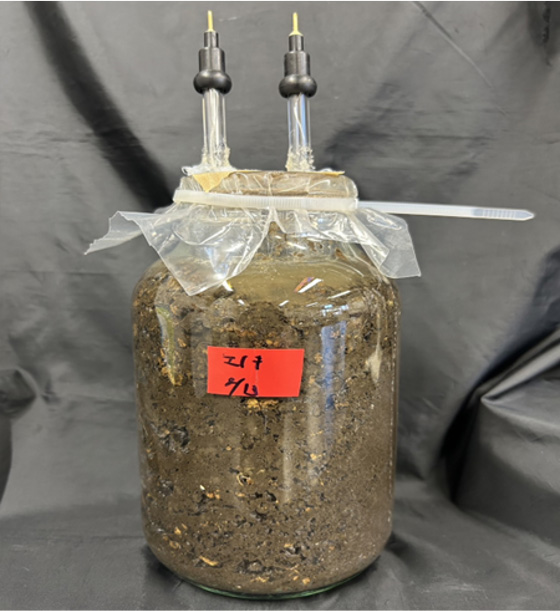
- Figure 1. RSD method utilised for labatory experiments.
- 5. Measurement of Fe2 and Mn2 in reduction-treated soil
Previous research has reported that when soil moves to a reduced state, iron and manganese undergo reductive dissolution into liquids in the soil17)18). Fe2 and Mn2 in the supernatant liquid from the 1-month reduction-treated soil were measured simply using the required test papers. For Fe2 measurement, a test paper (ADVANTEC Ion Test Paper Iron Check) was dipped in the supernatant liquid, with the resulting concentration measured. For Mn2 measurement, the reactive part of a test paper (MQuant Manganese Test, Merck) was dipped into the supernatant liquid for 1 second, attached reagent 1 (sodium hydroxide) was dropped onto the reactive part and left for 15 seconds, and reactive agent 2 (acetic acid) was dropped onto the reactive part and left for 1 minute, before concentration was measured.6. Examination of pathogen density within reduction-treated soil
The density for each pathogen present within each soil treatment group before and after reduction, was examined using the soil dilution plate method. Into a 200mL conical flask was placed a 10g soil sample and 100mL DW, and a soil extraction liquid was produced by shaking for 30 minutes at 140rpm. The soil extraction liquid was sequentially diluted at 10-1, 10-2, and 10-3, with the 100 μL diluted soil extraction liquid applied to each selected medium. For the bacterial wilt selected medium, Hara-Ono selected medium was used (300g potato, 0.5g calcium nitrate, 2g disodium hydrogen phosphate, 5g peptone, 20g sucrose, 15g agar, 1L DW, 5mL crystal violet [1mg/mL], 5mL cycloheximide [10mg/mL], 1mL polymyxin B sulphate [50mg/mL], 1mL chloramphenicol [10mg/mL], tetrazolium chloride [10mg/mL]). For the Fusarium selected medium, FO-G1 medium was used (1g potassium phosphate, 0.5g potassium chloride, 0.5g magnesium sulphate heptahydrate, 2g sodium nitrate, 0.5g boric acid, 5mg econazole nitrate, 0.2mL micronutrient solution [5g citric acid, 5g ferrous nitrate, 1g zinc sulphate heptahydrate, 0.5g copper sulphate, 0.05g manganese sulphate pentahydrate, 0.05g sodium molybdate, 95mL DW, mixed and autoclaved], 0.25g chloramphenicol, 20g agar, 1L DW, autoclaved and then post-sterilisation adjusted with the addition of 20g l-sorbose, 0.05mL iminoctadine triacetate 25% solution, and 1mg tolclofos methyl 50% wettable powder). Hara-Ono medium was incubated at 30°C and FO-G1 at 25°C for 1 week. The number of colonies that formed on top of the medium was measured, and the pathogen density (cfu/1g soil) was calculated for 1g soil. For the untreated group, pathogen density was similarly measured for contaminated soil that had been left to stand for 1 month. Through comparison with the untreated group, evaluation of the disinfestation effectiveness was carried out.7. Disease suppression effects for watermelon and spinach seedlings in reduction-processed soil
Contaminated soil that had undergone reduction processing using enoki SMS for 1 month was mixed with Andosol at a 1:1 ratio and place into pots (8cm diameter), before watermelon seedlings (grafted scion, `Tsukuna no Kaori`; root stock, `Kachidoki No. 2) and spinach seedlings (variety, `Okame`) were planted, and grown for 3 weeks in a growth chamber (14 hours of light/day, 30°C).Watermelon stems were cut horizontally, and the level of browning was observed. Evaluation of the degree of disease progression, and calculation of disease rate was carried out according to the following indices/formula. The experiment was conducted twice.
• Degree of disease progression (indices). 0: no browning; 1: less than 1/3 browning; 2: less that 2/3 browning; 3: more than 2/3 browning.
• Disease rate (%) = {Σ(index x no. plants of each degree of disease progression)/(3 x no. plants surveyed)} x 100The disease rate of spinach plants was calculated as the number of diseased plants within the total number of surveyed plants, using 5~10 plants per treatment group and conducted 3 times. - 8. RSD experiments on contaminated fieldsRSD experiments were conducted using enoki SMS on contaminated polytunnels plots at the Tottori Horticultural Research Center between 2021 to 2023. This was conducted in 2021 and 2022 on tomato bacterial wilt-infected fields, and in 2023 on spinach Fusarium wilt-contaminated fields.8-1. RSD experiments on tomato bacterial wilt-contaminated fieldsInto a 15m2 field (3m x 5m) contaminated with tomato bacterial wilt was ploughed, at a depth of 20~30cm using a rotavator, 15kg of enoki SMS processed by drying for more than 48 hours at 80°C, broken up lightly by hand, and then sieved to a 2mm mesh size. As a control group, wheat bran was processed in the same way. Agricultural polyethylene film (0.05mm) was used as a cover, and more than 100L/m2 of tap water was applied to the area using 5 irrigation tubes. The polytunnel was left for 27~29 days in a sealed state. A water-treated group, where only irrigation was carried out, and an untreated group were also produced in the same way. Temperature of the soil at 20cm and 60cm, as well as within the polytunnel, was measured. The Eh value of the soil in each treatment group was measured at a depth of 20cm. Furthermore, a dipyridyl solution (1g dipyridyl reagent dissolved into 500mL 10% acetic acid solution) was sprayed on the soil of each treatment group, with soil reduction evaluated through observation of the colour reaction. From each treatment group 6 soil samples (20cm and 60cm depth) were taken (3 samples x 2 locations), for both pre- and post-reduction treatment, with disinfestattion effectiveness evaluated through measurement of pathogen density using soil dilution plate method with Hara-Ono medium, as described above.Once soil reduction treatment was complete the film was removed and the polytunnel was opened up. The soil was then given shallow cultivation and left for a week. Grafted tomato plants (grafted scion `Sun Cherry Pure`; bacterial wilt-resistant root stock `Caddy No.1 [Tokita]) and non-grafted (variety `Sun Cherry Pure`) cherry tomato plants were planted out with 20 plants to each treated plot, spaced in rows 80cm apart (2 rows per plot), and 40cm between plants. Fertiliser was not applied before or during cultivation, and standard management of cultivation was carried out. Evaluation of the degree of bacterial wilt disease progression, and calculation of disease rate was carried out according to the following indices/formula.• Degree of disease progression (indices). 0: no disease; 1: wilting of leaf tops; 2: wilting of leaves; 3: bacterial wilt symptoms across entire plant; 4: dead.• Disease rate (%) = {Σ(index x no. plants of each degree of disease progression)/(4 x no. plants surveyed)} x 1008-2. RSD experiments on spinach Fusarium wilt-contaminated fieldsInto a 20m2 field (8m x 2.5m) contaminated with spinach Fusarium wilt was ploughed, at a depth of 20~30cm using a rotavator, 20kg of dried, or 44kg of undried, enoki SMS. A control plot was prepared in the same way using wheat bran. As with (1), plastic film was laid down and the plot was irrigated with tap water before the polytunnel was left in a sealed state for 33 days. The temperature of the soil at a depth of 20cm, as well as inside the polytunnel, was measured, as was the Eh value of the soil for each treated plot. Soil samples were taken for each control plot (depth 20cm) before and after reduction treatment, with disinfestation effectiveness evaluated through measurement of pathogen density using soil dilution plate method with FO-G1 medium.Following soil reduction treatment the spinach (variety `Okame`) was sown, with growth surveys conducted for each of the treated plots, at four locations and of 50 plants each. The roots were removed, and the disease rate was calculated by treating plants with observable browning as infected. The length of the plant and the weight of the plant above ground was also measured.
- Results and discussion1. Effectiveness of soil reduction and odour evaluation in SMS treatment
According to Shinmura3), in order for control of soil-borne pathogens to be effective using RSD, it is necessary for the soil Eh value to drop below -100mV. As such, we set the indicator for effective soil reduction treatment as an Eh value of -100mV. The results of conducting reduction treatment using each type of SMS mixed at each proportion was as follows: for SMS mixed at 1% and 2%, an Eh value of -100mV was reached, and subsequently maintained, at day 4 for the bunashimeji SMS treatment group, and day 7 for the enoki and shiitake treatment groups (Figures 2A and 2B); for SMS mixed at 5%, all types of SMS achieved -100 mV on day 2, and subsequently maintained this value (Figure 2C). Furthermore, for the wheat bran control group, -100mV was reached on day 9 mixed at 1% and 5%, and day 2 mixed at 2%. For all the SMS treatments mixed over 2%, an Eh value of -100mV, indicating effective reduction, was achieved within 1 week. As there was not a large difference in reduction effect observed between each SMS type, enoki SMS was used for further experiments, having the largest domestic consumption. Furthermore, as a low reduction potential was maintained at 2% mix with enoki SMS, this 2% proportion was used for subsequent treatments. 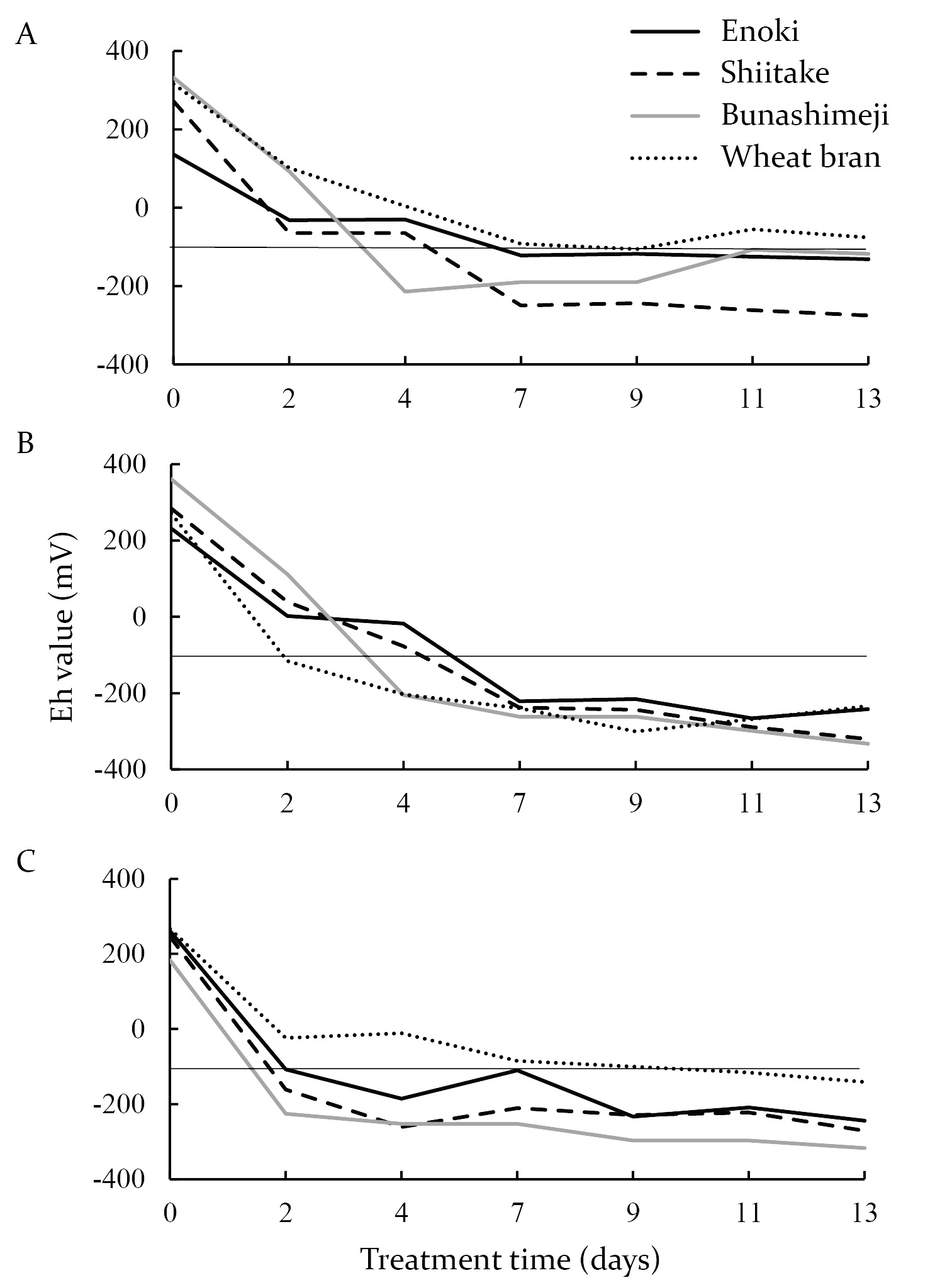
- Figure 2. Reduction effect for each proportion of incorporated SMS.
A: 1% SMS; B: 2% SMS; C: 5% SMS - The results of tests on odours produced during the process of reduction disinfestation using enoki SMS were as follows: for the wheat bran control treatment, the odour value was between 100~250, whereas for enoki SMS the value was low, between 50~160 (Figure 3). While no significant difference was observed through t testing between the two treatment groups, for the 1% and 2% mixes, throughout the treatment period a tendency for progression at low odour values was observed for the SMS treatment group in comparison to the wheat bran treatment group. Offensive odours caused by RSD are thought to be caused by the breakdown of proteins that exist within organic material such as wheat bran19), suggesting suppression of offensive odours through difference in protein content between SMS and wheat bran.2. Disinfestation effect using enoki SMS treatment on pathogen-contaminated soil
The results of reduction treatment using enoki SMS on each type of contaminated soil are as follows: for all the contaminated soils, where SMS was used an Eh value of -100 was reached within 1 week, subsequently maintaining a stable reductive state, and with a similar level of reduction observed in the wheat bran control group (Figure 4). The Fusarium contaminated soil mixed with 2% undried enoki SMS showed a similar level of reduction to that treated with dried enoki SMS.The elution-tested concentration of metal ions Fe2 and Mn2 was measured for the supernatant of each type of contaminated soil for which reduction disinfestation was carried out for 1 month using enoki SMS (Table 1). The results showed the same Mn2 concentration value as for the wheat bran control group, with Fe2 concentration the same value or slightly lower than the wheat bran control group. Soil reduction for the SMS treatment group was confirmed through the higher concentration of metal ions in comparison to the water treatment group. Furthermore, the fact that elution of both metal ions was confirmed during the water treatment of Fusarium-infected soil can be thought to be the impact of reduction caused by wheat bran included within the base soil substrate inoculated during the process of producing contaminated soil. 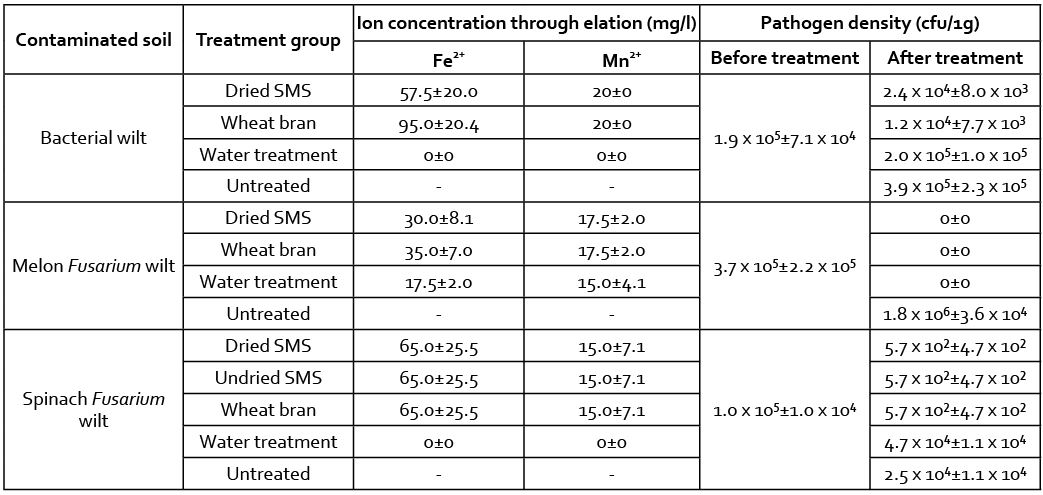
- Table 1. Elution tested concentration of ions and pathogen density in post-RSD soil.
Each test was conducted 3 times, and numerical values show average value ± standard error. 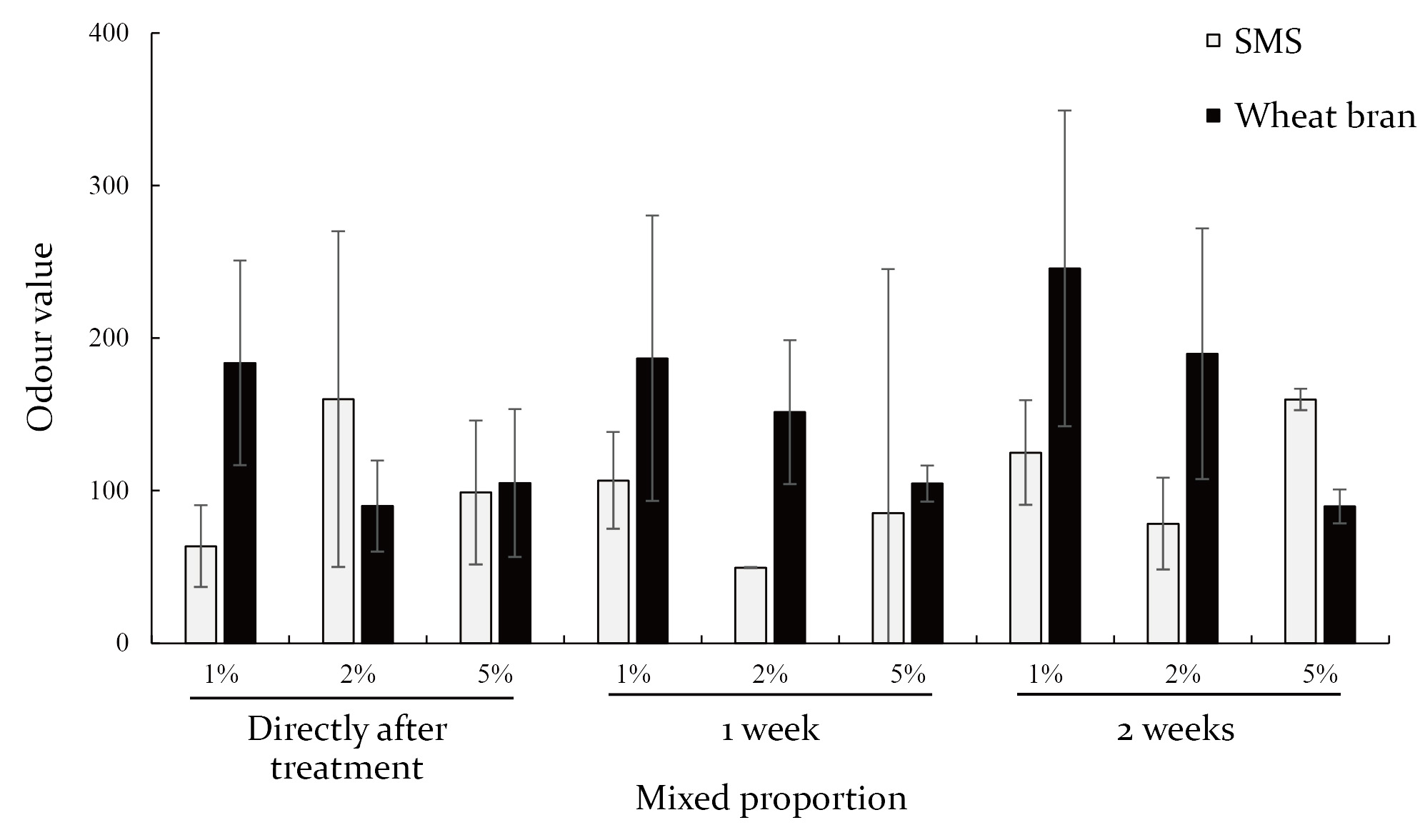
- Figure 3. Odour values for RSD using enoki SMS and wheat bran.
- The results of investigation into the density of each pathogen contained within the soil of each treatment group before and after soil disinfestation (Table 1) showed an increase, for bacteria-wilt contaminated soil, in the bacterial density of the untreated and water-treated group in comparison to before reduction disinfestation. In contrast, the bacterial density decreased by, respectively, 87% and 93% for the SMS treatment group and the wheat bran treatment group. In watermelon Fusarium-wilt contaminated soil, fungal density was 0 for the SMS and wheat bran treatment groups in comparison to before treatment, demonstrating a striking level of suppression. For spinach Fusarium wilt contaminated soil as well, fungal density reduced by more than 99% for both the undried and dried enoki SMS treatment groups, and the wheat bran treatment group. A substantial reduction in pathogen density was observed in all the contaminated soils through RSD using SMS, demonstrating a disinfestation effect.Next, watermelon and spinach seedlings were planted into contaminated soil that had undergone reduction disinfestation, to examine the onset of disease. For watermelon seedlings the results were as follows: the untreated group had a disease rate of 55.0±2.9%; in contrast, the SMS treatment group and the wheat bran treatment group both had a disease rate of 7.5±0.5%, and a suppression rate of 86.4% (Figure 5). A statistically significant level of suppression of disease onset was thus shown through reduction treatment using SMS. For spinach seedlings the results were as follows: the untreated group had a disease rate of 86.7±10.9%; in contrast, the undried and dried enoki SMS treatment groups both had a disease rate of 13.3±10.9%, and a suppression rate of 84%, showing statistically significant suppression of disease onset for SMS treatment. The wheat bran treatment group had a suppression rate of 88%, meaning that a similar disease suppression effect was observed in the SMS treatment group as with the wheat bran treatment group.
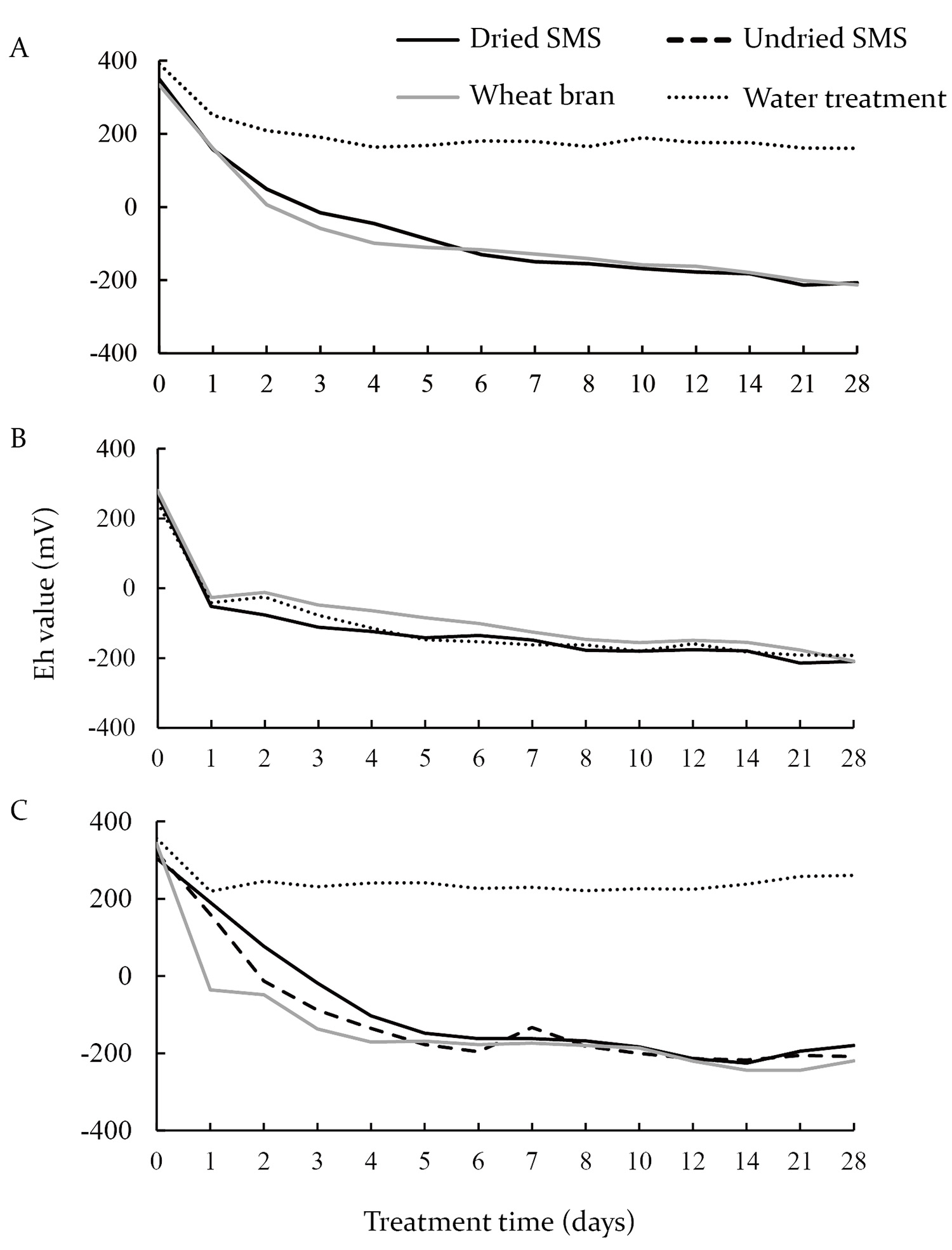
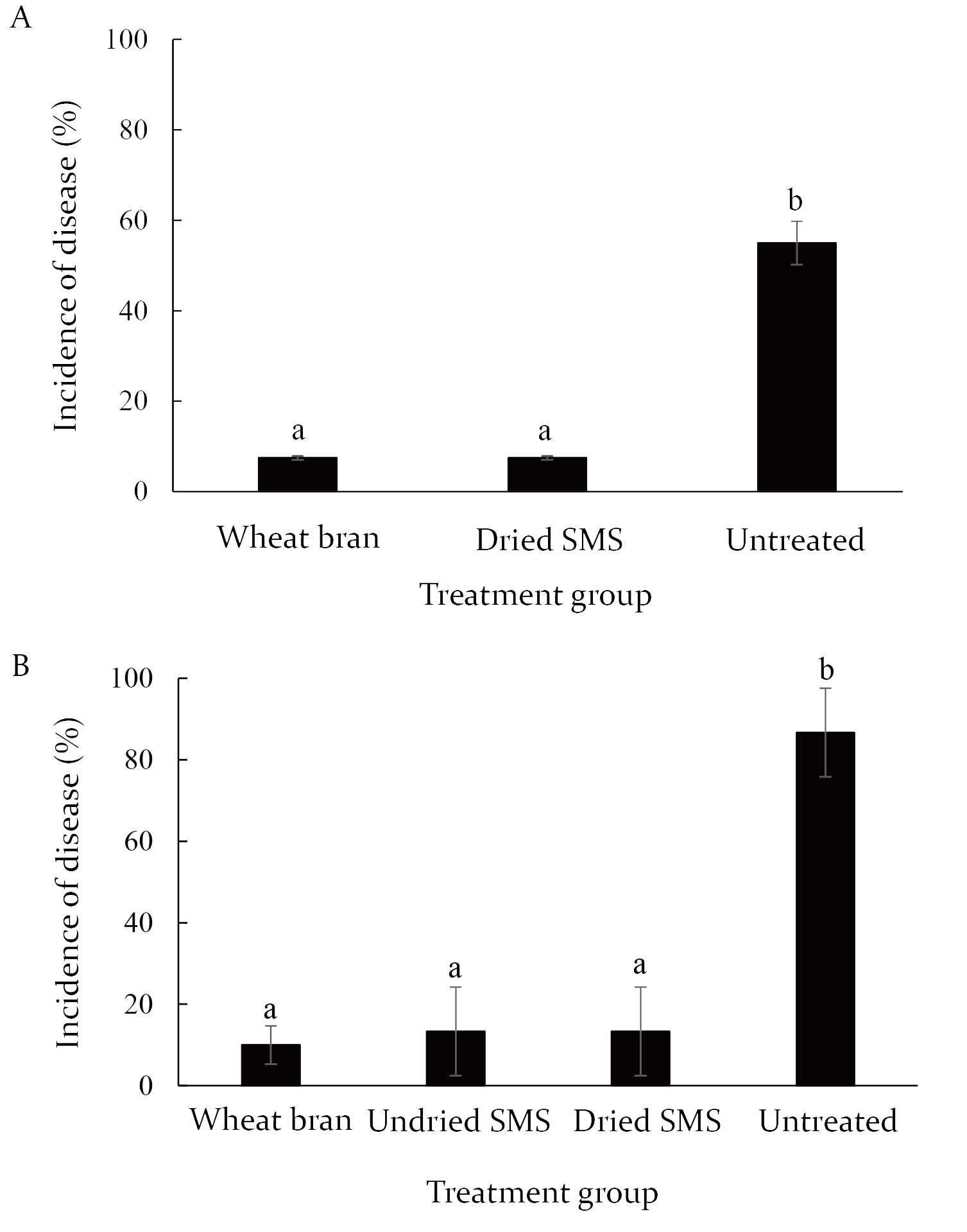 Figure 4. Reduction effect for RSD using enoki SMS (2% proportion) for each type of contaminated soil.
A: bacterial wilt-contaminated soil; B: melon Fusarium wilt-contaminated soil; C: spinach Fusarium wilt-contaminated soil.Figure 5. Disease suppression effect for plants transplanted into soil post-RSD.
A: watermelon plants; B: spinach plants
In t tests a 5% level of statistical significance was shown between a and b.- 3. RSD tests on contaminated fields
3-1. Disinfestation effect in fields contaminated with tomato bacterial wilt
Tests were conducted on bacterial wilt contaminated fields from 5th June to 2nd July 2021 (27 days) and from 2nd June to 1st July 2022 (29 days). Measuring the soil temperature and the air temperature within the polytunnel during the period of reduction disinfestation, the soil temperature at a depth of 20cm reached 30°C from day 2 following processing for the 2021 SMS treatment group, and from day 6 following processing for the 2022 group. Soil temperature at a depth of 60cm reached 30°C from day 6 following processing in 2021, and day 16 in 2022. In order to achieve effective reduction it is necessary to maintain soil temperature above 30°C, and this was easily maintained as part of the test. For both years, when measuring the Eh value at a depth of 20cm for both the SMS and wheat bran treatment groups, -100mV was reached with 8 days following processing, and a value below -100mV was generally maintained following that (Figure 6A and 6B). Furthermore, for the untreated group a drop was not observed, having an Eh value of around 500mV.Soil samples were collected following reduction disinfestation in 2021 and 2022 for each treatment group at depths of 10cm, 20cm, and 60cm. Examining the reduction state of the soil through dipyridyl reaction showed a reddish-brown colour for soil at depth of 10cm and 20cm for the SMS and wheat bran treatment groups, but soil at a depth of 60cm showed either a light red colour, or no colour at all. This suggests that reduction occurred up to a depth of 20cm, but that at a depth of 60cm adequate reduction did not occur, and there is low disinfestation effect for pathogens existing at lower soil depths.Measuring the EC value of soil samples taken before and after reduction gave 0.10 mS/cm for soil at a depth of 20cm for the SMS treatment group, and 0.16 mS/cm at 60cm, lower than that prior to processing (0.24mS/cm at 20cm, 0.22mS/cm at 60cm). The pH value of the soil was measured at pH6.78 at 20cm and pH5.64 at 60cm, with no striking difference observed with that prior to treatment (pH6.89 at 20cm, pH6.32 at 60cm). 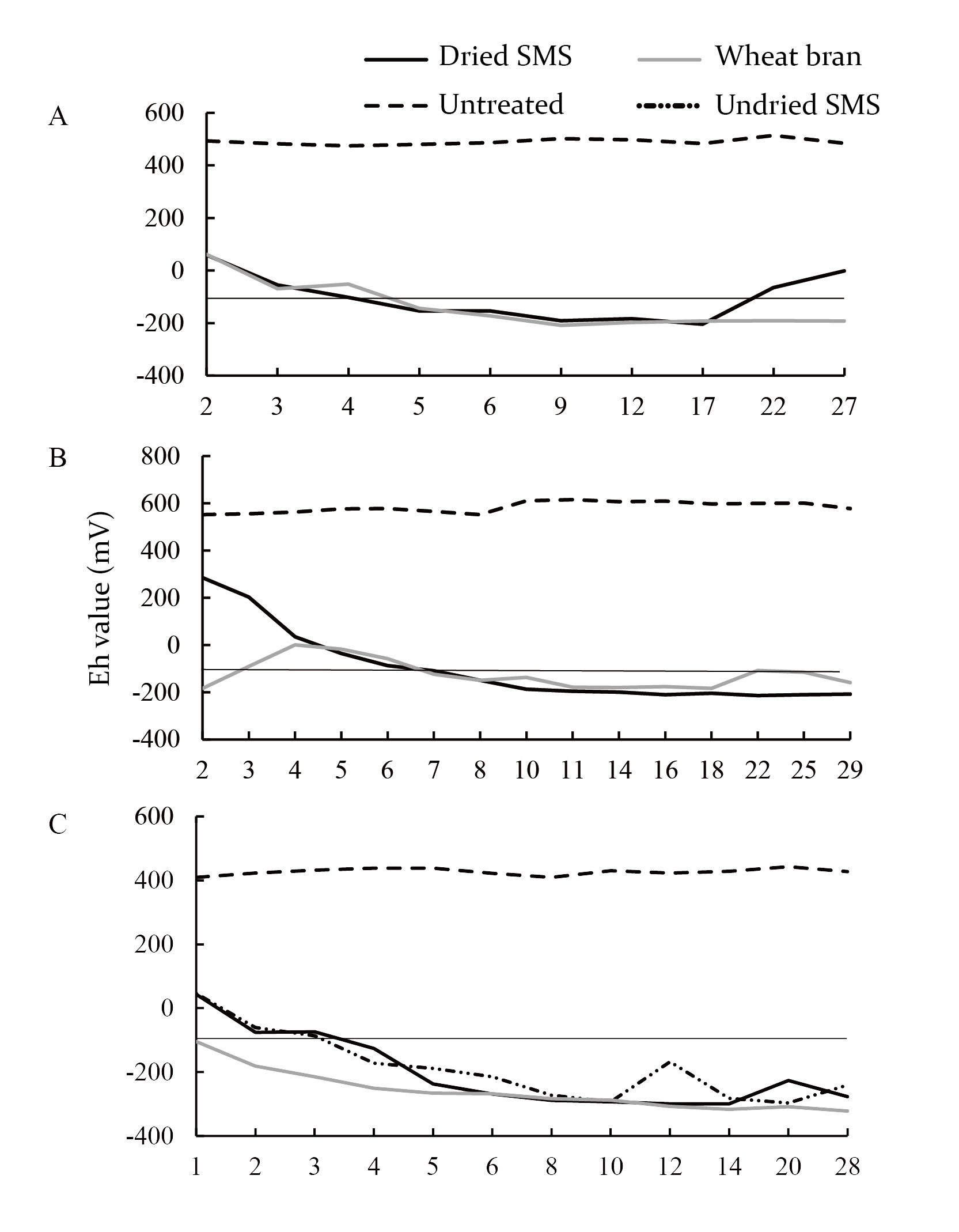
- Figure 6. Change in oxidation-reduction potential during RSD periods in contaminated outdoor plots.
A: 2021; B: 2022; B: 2023 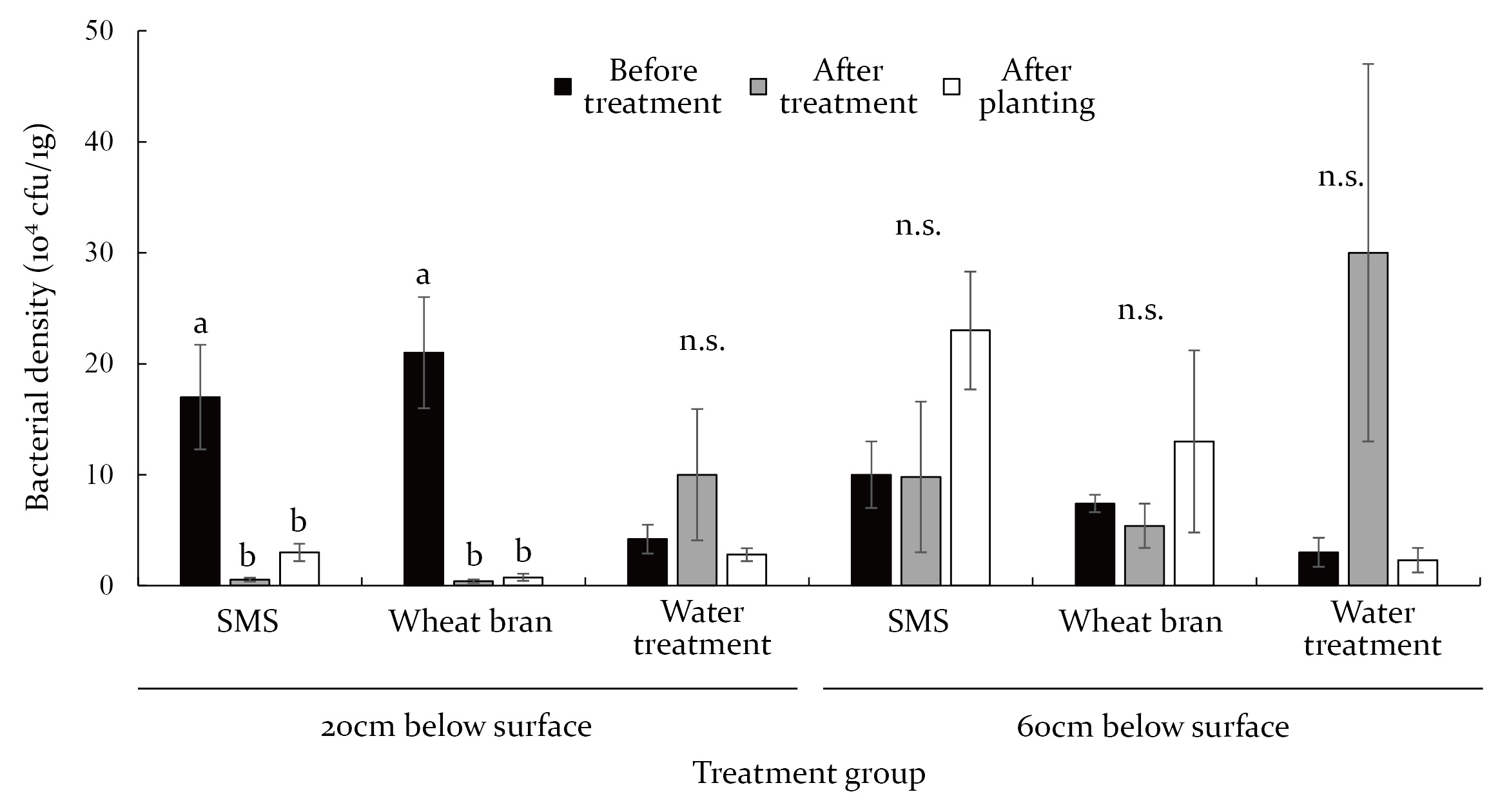
- Figure 7. Pathogen density of tomato bacterial wilt in soil post-RSD in 2022.
In t tests a 5% level of statistical significance was shown between a and b. n.s. indicates that a 5% level of statistical significance was not shown. - Measuring the density of bacterial wilt from soil samples before and after reduction disinfestation showed, in 2022, a statistically significant decrease in bacterial density within the soil at a soil depth of 20cm for the SMS treatment group in comparison to that prior to treatment (Figure 7). From the fact that the suppression effect of bacterial density was higher at a depth of 20cm than at 60cm, it can be considered that reduction did not sufficiently reach soil at a depth of 60cm, and could not suppress bacterial wilt living at deeper levels. The measured results for bacterial wilt density were the same for 2021.Surveys were conducted on plant growth and disease rate after planting out both grafted and non-grafted tomato plants (in 2022, grafted tomatoes only) in each of the control plots following reduction disinfestation. For both years no impact was observed on reduction-treated tomato growth. In the 2021 survey into disease level, non-grafted tomatoes planted into the wheat bran treated plot and the untreated plot showed a disease rate at 21 days after planting of, respectively, 30.0±10.6% and 26.3±2.7%; no disease was observed at the same point in the SMS treated plot (Figure 8A). At 25 days after planting, the disease rate for the SMS treated plot was 55.0±10.6%, but had the slowest onset of disease. For the grafted tomatoes, while a disease rate of 3.8±0.9% was confirmed in the untreated plot at 25 days after planting, for the wheat bran and SMS treatment plots the disease rates 32 days after planting were 10.0±0.0% and 2.5±1.8% respectively, showing statistically significant disease suppression in comparison to the untreated plot (Figure 8A). At 57 days after planting the disease rate was 95.0±3.5% for the untreated plot, 67.5±5.3% for the wheat bran treatment plot, and 60.0±14.1% for the SMS treatment plot, with the SMS treatment plot progressing at the slowest rate (Figure 8A). For the 2022 disease rate survey, onset of disease in the untreated plot was seen on the 25th day after planting, whereas for the SMS treatment plot this occurred on day 32 after planting, having the slowest disease onset among the treatment plots (Figure 8B). The disease rate at day 86 after planting was 48.8±4.4% for the SMS treatment plot, 72.5±0.01% for the wheat bran treatment plot, and 75.0±12.4% for the untreated plot, with the SMS treatment plot progressing at the slowest rate (Figure 8B).
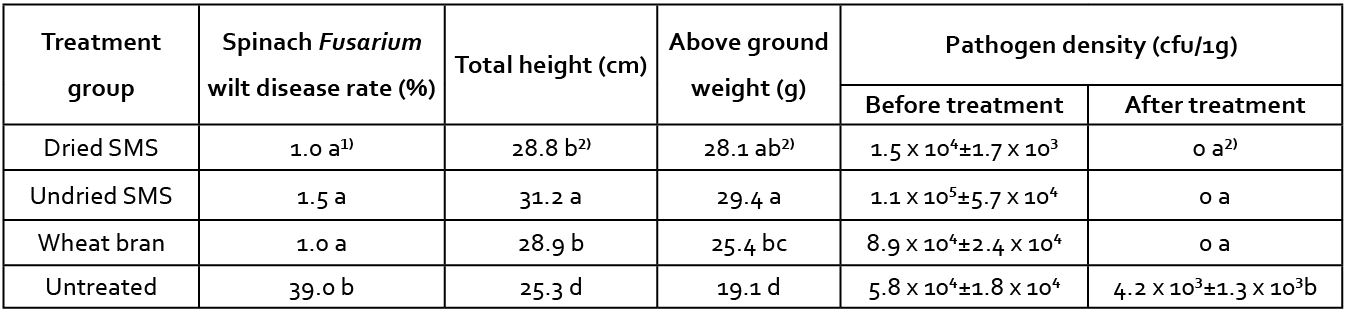
- Table 2. Survey of plant growth and spinach Fusarium wilt disease rate for spinach transplanted into soil post-RSD.
¹⁾ Different symbols within the same column indicate a 5% level of statistical signifiance with Ryan`s test.
²⁾ Different symbols within the same column indicate a 5% level of statistical signifiance with Tukey-Kramar test. - From the above, it can be seen that for the use of SMS reduction disinfestation for non-grafted tomatoes does not suppress the disease itself, but is effective in slowing down its onset. For grafted tomatoes, effectiveness was shown for both slowing the onset of disease, and disease suppression. The reduction disinfestation effect using enoki SMS on fields contaminated with bacterial wilt is on the whole the same as the reduction disinfestation results from indoor experiments. Furthermore, it became clear that, due to insufficient reduction in soil deeper below the surface, it is difficult to completely eradicate bacterial wilt, and that high suppression of disease from bacterial wilt can be demonstrated through the combined use of reduction technology alongside grafted cultivation using resistant varieties.3-2. Disinfestation effect in fields contaminated with spinach Fusarium wilt
Tests were conducted on spinach Fusarium wilt-contaminated fields from 29th July to 1st September 2023 (34 days). For the dried and undried SMS treatment plots an Eh value of -100mV was reached on the 4th day after treatment, with -100mV subsequently maintained (Figure 6C). For the untreated plot, no drop in potential was observed. Soil samples following reduction disinfestation were taken at a depth of 20cm for every treatment plot, with the results of tests on the reduction state through dipyridyl reaction showing a red colour for both the undried and dried SMS treatment plots and the wheat bran treatment plot, confirming reduction. The soil prior to reduction treatment was at pH6.7 which, following treatment, was at pH 7.3 for the undried and dried SMS treatment groups, with generally no change. In contrast, the EC value dropped, from 0.46 mS/cm prior to treatment, to 0.25 mS/cm for the undried and dried SMS treatment plots. 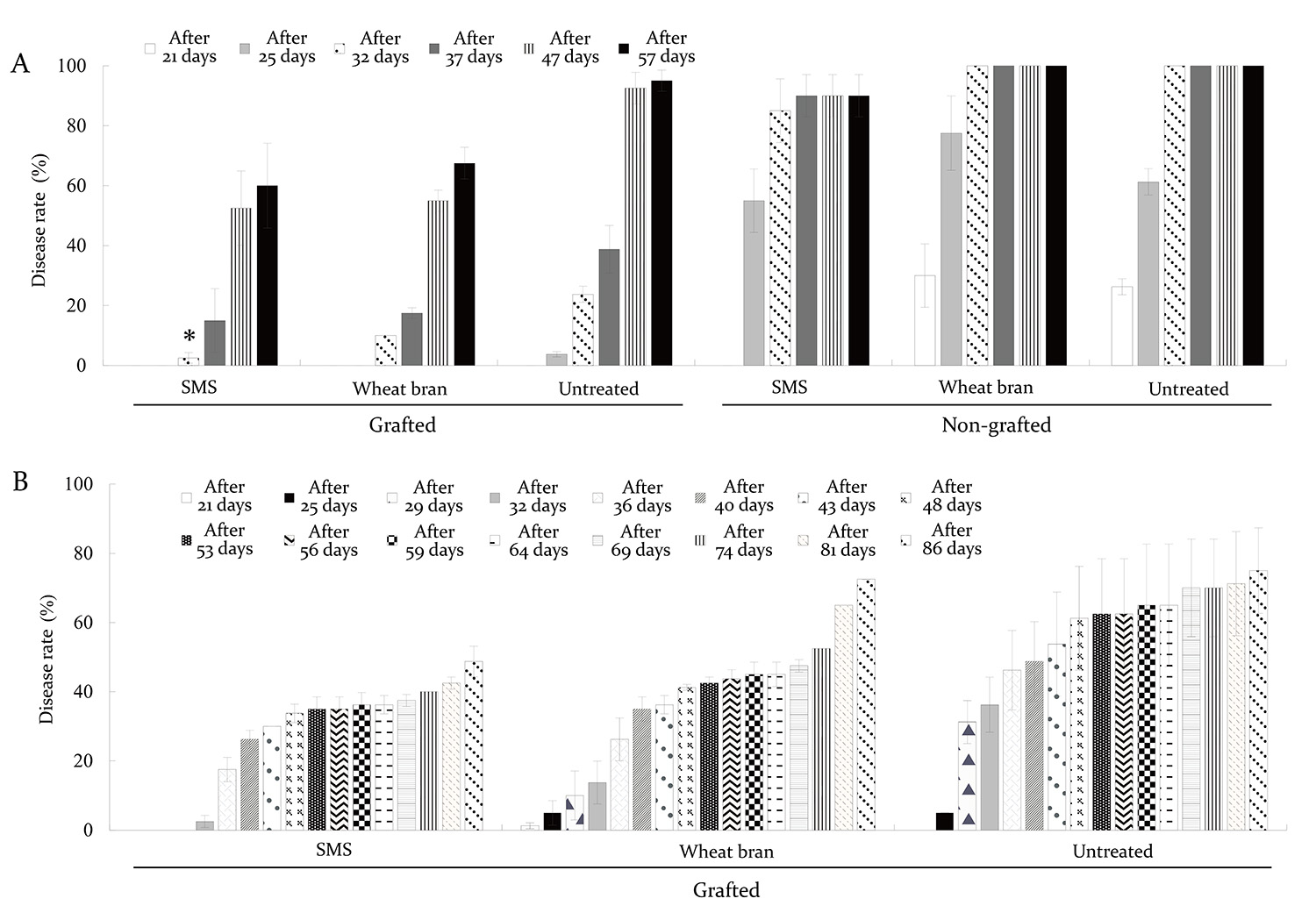
- Figure 8. Survey on bacterial wilt disease rate for tomatoes transplanted into soil post-RSD.
A: 2021; B:2022
* indicates 5% level of statistical significance in a t test in comparison with the untreated plot. For treatments without *, no statistical significance was seen in comparison to the untreated plot. - Next, soil samples taken both before and after reduction disinfestation were measured for the density of Fusarium wilt. While the density prior to treatment was 104~105 cfu/1g of soil, following treatment for the undried and dried SMS treatment plots and the wheat bran treatment plots no colonies were detected, with a significant decrease in fungal density (Table 2). The density for the untreated plot was 103 cfu/1g of soil. Results from tests on the growth and disease rate of spinach plants planted into each treatment plot following reduction disinfestation (Table 2) showed a statistically significant increase in overall plant length and above-ground weight for the undried/dried SMS treatment plots and wheat bran treatment plot in comparison to the untreated plot. The rate of Fusarium wilt disease also reduced, with the number of infected plants at 1.0~1.5% for the undried/dried SMS treatment plots and the wheat bran treatment plot, in comparison to 39.0% for the untreated plot (Table 2). Previous research20) has suggested that application of used shiitake substrate in soil used for growing sweetcorn improves harvest weight in comparison to untreated soil, having a similar fertilisation effect to that of artificial fertiliser. Through the use of RSD using SMS it can be thought that components within the SMS contribute to the stimulation of plant growth. It can be inferred from the research shown here that the main factor in the promotion of spinach growth for the undried SMS treatment plot in comparison to the dried SMS treatment plot is the decomposition or denaturing of fertilising compounds within SMS through drying at high temperatures. Further study is necessary on the fertilisation effects of RSD using SMS, for each agricultural crop.As shown above, similar disinfestation effects have been observed for RSD tests using undried or dried SMS in spinach Fusarium wilt-contaminated fields to reduction tests conducted inside the laboratory. As Fusarium wilt does not live deep below the soil surface, but rather at a soil depth of 20cm at which adequate reduction has been shown, we can consider there to be a high disease suppression effect.From this research, the results of reduction disinfestation using enoki SMS as a RSD material have confirmed that an effective soil reduction state is produced for soil disinfestation, and that it brings about a rise in soil temperature. Furthermore, in post-reduction soil there was a reduction in pathogen density for tomato bacterial wilt, watermelon Fusarium wilt, and spinach Fusarium wilt, and the suppression of disease for tomato, watermelon, and spinach plants planted in disinfected soil. This suggests that enoki SMS can be used adequately as a RSD material, similar to wheat bran. Further study is necessary into the reduction disinfestation effect on soil-borne pathogens other than bacterial wilt and Fusarium wilt. The price of the conventional RSD material, wheat bran, is on the rise21). If enoki SMS is used as an alternative we can expect connected cost reductions, through the use of material that would originally be discarded. While this research has shown that it is not necessary to process SMS through drying, and using undried SMS also has effective disinfestation results, the use of dried SMS at the soil mixing stage can be considered to have higher work efficiency. Moving towards practical implementation of this technology, it is hoped there will be consideration of more efficient processing methods. Furthermore, as the long-term fertilisation or disease suppression effects of soil following reduction disinfestation using SMS have not been made clear, continued examination is required.
- AcknowledgmentsPart of the results of this research received support from the JST Adaptable and Seamless Technology Transfer Program through Target Driven R&D (A-STEP) Try-out JPMJTM20FT.References1) Higashi Y. (2001). Shūka mechiru sakugen keikaku no genjō (Current situation of methyl bromide reduction schedule). Plant Protection, 55: 433-437.2) Monma N. (2013). Dojō kangen shōdoku hō ni yoru tomato ichōbyō no mitsudo teigen kōka no mekanizumu kaiseki (Mechanisms for suppression of Fusarium oxysporum f. sp. lycopersici by anaerobicity-mediated biological soil disinfestation). Plant Protection, 67: 210-213.3) Shinmura A., Sakamoto N. and Abe H. (1999). Kangen shōdoku ni yoru negine fuchō byō no bōjo (Control of Fusarium root rot of welsh onion by soil reduction). Annals of the Phytopathological Society of Japan, 65: 352-353.4) National Agriculture and Food Research Organization (2019). Shinki dojō kangen shōdoku o shutai to shita tomato chikabu byōgaichū bōjo taikei manyuaru, gijutsuban (Manual on prevention systems for underground pests and diseases for tomato plants focused on new soil reduction disinfestation). URL: https://www.naro.go.jp/publicity_report/publication/files/3c76e50cabb029d829fed7e51e9cdbbb.pdf5) Yamaguchi J., Urata J. and Kan M. (1987). Shisetsu saibai no nasu aokarebyō ni tai suru taiyōnetsu riyō no bōjo kōka (Effect of soil solarization on the control of bacterial wilt of eggplant in vinyl house). Kyushu Plant Protection Research, 33: 45-47.6) Kuwahara K., Takahashi M., Ōhori T. and Miki S. (2011). Shisetsu kyūri ni okeru teinōdo etanōru o mochiita dojō kangen shōdoku hō ni yoru kasōdo no nekobusenchū no bōjo kōka (Effect of reductive soil disinfection with ethanol on root-knot nematodes in the subsoil of greenhouse for cucumbers). Annual Report of the Kanto-Tosan Plant Protection Society, 58: 85-89.
- 7) Shinmura A. (2003). Tōmitsu o riyō shita dojō kangen shōdoku no kasōdo e no bōjo kōka (Prevention effects on sub-surface soil of soil disinfection reduction using molasses). Annals of the Phytopathological Society of Japan, 69: 78.8) Monma N. (2017). Dojō kangen shōdoku no fukyū no genjō to kongo no tenbō (Anaerobic soil disinfestation: Current status of dissemination and future direction). Soil Microorganisms, 71: 24-28.9) Ōtani Y. (2018). Tomato aokarebyōkin ni taisuru tōganyū keisōdo to tōmitsu kyūchaku shizai o mochiita dojō kangen shōdoku no shori jōken no kentō (Effective conditions for anaerobic soil disinfection of Ralstonia solanacearum using sugar-containing diatomite and dried molasses). Annual Report of the Kansai Plant Protection Society, 60: 71-76.10) Forestry Agency (2023). Reiwa 5 nen tokuyō rinsanbutsu seisan tōkei chōsa kekka (Results of the 2023 statistical survey into forestry product production). URL: https://www.maff.go.jp/j/tokei/kekka_gaiyou/tokuyo_rinsan/r5/index.html11) Ōga S. (2013). Kinoko haikinshō no kachiku shiryō to shite no riyō (Using spent mushroom substrate as cattle feed). Agriculture and Horticulture, 88: 700-704.12) Shimota T., Baba Y., and Nishibori K. (2008). Kinoko haikinshō no bōru kakuhangata heikō fukuhakkō hō ni yoru etanōru henkan (Ethanol conversion of spent mushroom culture medium by the ball-vibration simultaneous saccharification and fermentation system). Mokuzai Gakkaishi, 54: 340-345.13) Yokota S., Yamatani H., Ishiguri F., Oku T., Iizuka K., and Yoshizawa N. (2006). Nameko haibaichi no seibunkai to taihika (Biodegradation and composting of nameko (Pholiota nameko (T. Ito) S Ito) cultural wastes). Shokubutsu Kankyo Kogaku, 18: 290-298.14) Nakatani M., Yoneyama S., Katō Y., Yamamura T. and Ōga S. (1998). Kinoko haibaichi no sairiyō (dai 2 hō): shiitake hai hodagi ogako o mochiita hiratake saibai hinshu oyobi enokitake yaseikabu no saibai (Recycling of the waste substrate for mushroom cultivation. II : Cultivation of Pleurotus ostreatus and Flammulina velutipes using the sawdust from waste Shiitake bed logs). Mushroom Science and Biotechnology, 6(3): 95-99.15) Kumata A., Takehara T., and Aono S. (1995). Nameko (Pholiota nameko) kinshō saibai in okeru shijitsutai no hassei furyō genshō (Phenomenon of poor yields for fruiting bodies in commercial cultivation of nameko (Pholiota nameko). Mokuzai Gakkaishi, 4: 114-119.16) Ōsaki-Oka K. and Ishihara A. (2021). Kinoko haikinshō no aratana tsukaimichi - tennenbutsu yurai no anzen/anshin na shokubutsu byōgai bōjo shizai (A novel rechnology for upcycling the spent mushroom substrates to plant disease control). Chemical Industry, 11: 748-754.17) Takai Y. and Kamura T. (1996). The mechanism of reduction in waterlogged paddy soil. Folia Microbiologica, 11: 304-313.18) Kamura T. (1962). Suiden dojōchū ni okeru dai 2 tetsu oyobi mangan no kangen kikō (Ferric and manganese reduction mechanisms in waterlogged paddy soil). Soil Microorganisms, 3: 24-30.19) Chiba Prefecture Agriculture, Forestry, and Fisheries Research Council (2016). Teinōdo etanōru o mochiita dojō kangen shōdoku hō jisshi manyuaru (Practical manual for soil reduction disinfestation using low concentration ethanol). URL: https://www.pref.chiba.lg.jp/ninaite/seikafukyu/documents/h2707_etanoru.pdf20) Katō K., Matsushima U., Mutō Y., Tatsuzawa F., and Okada M. (2013). Higashi Nihon Daishinsai no hisai nōchi ni okeru shiitake haikinshō no seyō ni yoru dojō oyobi suītokōn no seiiku/shūryō no kōka (Effects of application of spent shiitake substrates in farmlands damaged by the Great East Japan Earthquake on soil conditions and sweet corn growth and yield). Horticultural Research, 12(4): 381-387.21) Ministry of Agriculture, Forestry and Fisheries (2023). Nōgyō bukka tōkei chōsa - reiwa 2 nen kijun (Agricultural prices statistical survey - 2020 base). URL: https://www.e-stat.go.jp/stat-search/files?tclass=000001219300&cycle=7&year=20230


 1-2-13 Honmachi, Komoro city, Nagano prefecture, Japan 384-0026