
Login or Subscribe
You must be logged in to access this content
◆ Discover exclusive Japanese mushroom cultivation techniques
◆ Learn innovative methods to enhance mushroom quality and yield
◆ Tap into Japan's rich heritage for unique growing insights
Subscribe Now for Free Login
Cultivated Hericium erinaceus mushrooms synthesize trans-resveratrol 3-O-β-D-glucuronide, a functional free radical scavenging and longevity-promoting secondary metabolite
Fang*, D., Leite*, H.H.F.G., Hayman, R.B., Wong, M.H.T., Rossato, M., Merante¥, F.
Seneca Centre for Innovation in Life Sciences (SCILS) and School of Biological Sciences
& Applied Chemistry, Toronto, Ontario, Canada. M3J 3M6
* Both authors contributed equally to this study
¥ Corresponding author: frank.merante@senecapolytechnic.ca- Abstract
The identification, quantification, and characterization of a novel secondary metabolite, trans-resveratrol 3-O-β-D-glucuronide in Hericium erinaceus by metabolomics profiling of ethanol extractable compounds further contributes to the expanding list of desirable molecules present in this nutraceutical basidiomycete species. The DPPH free radical scavenging activity of Hericium extracts, under the cultivation conditions illustrated, exhibited a percent free radical scavenging activity of 35% which was comparable to the RSA activity of pure resveratrol at a concentration of 31 μg/mL. This resveratrol derivative was determined to be present at approximately 178 μg/g mushroom dry weight in 95% ethanol extracts, and 445 μg/g in the 70% ethanol extracts, thereby
making Hericium erinaceus a novel and notable source of this potent longevity-promoting and free radical scavenging secondary metabolite.
Keywords: Trans-resveratrol 3-O-β-D-glucuronide, functional food, nutraceutical, antioxidant, anti-aging, longevity-promoter, health-span improvement, anti-microbial, mitochondrial support, oxidative stress defence, bioprospecting, free radical scavenging - Introduction
The medicinal and gourmet Lion’s Mane mushroom, Hericium erinaceus, is noted for both its subtle flavor profile and differentiating medicinal effects. Most notably, Hericium is highly regarded for its distinct secondary metabolite distribution in the mycelium and fruiting body. Specifically, hericenones metabolites are produced by the mushroom fruiting body while the erinacines are found in the mycelium. This distribution necessitates the differential gene regulation of
specific enzymes, and hence metabolic pathways, during the development of the mushroom life cycle. This is not surprising as distinct secondary metabolites are commonly found at different stages of development in various mushroom species. Also notable are differences in the abundance and partitioning of metabolites across the various parts of the fruiting body such as the stipe, stem, and hymenial, spore-forming surface (Gao et al., 2024). Interestingly, metabolite production can also be dramatically influenced by the cultivation conditions whereby particular desirable metabolites, both small and macro polymeric, can be modulated by modifying the cultivation substrate or the physical growing environment (Rämä and Quandt, 2021). Accompanying this is the specific harvesting during a specific phase of the developmental mushroom cycle when particular metabolites are at their peak. Resveratrol is such a desirable functional metabolite with notable therapeutic benefits.Resveratrol (3,4,5-trihydroxystilbene, Figure 1A) is a highly valued polyphenol which was originally noted in red wine grapes, berries, and peanuts as a secondary metabolite (Galiniak et al., 2019) promoting longevity in consumers of these functional foods. The polyphenol was notably active even at the low concentrations found in such plant-derived foods and beverages (Kiselev, 2011). Longevity promotion is in part due to resveratrol’s ability to activate sirtuins and influence the cellular redox state by increasing cellular nicotinamide-adenine-dinucleotide (NAD ) levels (Bonkowski and Sinclair, 2016). Commercially available mushrooms have been shown to possess numerous polyphenols that contribute to the high antioxidant potential and the mitigation of oxidative stress by various cultivated species (Palacios et al., 2011; Chu et al., 2023; Abdelkader, 2024), but non-genetically modified mushrooms have not been thoroughly investigated with regards to their resveratrol content, or derivatives thereof.Research into resveratrol’s other beneficial effects includes its role as a potent cellular antioxidant (Galiniak, 2019), anti-inflammatory (Malaguarnera, 2019), UV-protectant (Cui et al., 2022), and anti-glycan agent (Galiniak, 2019). In addition, it has been shown to be a specific cancer cell antiproliferative agent fostering cancer cell apoptosis and sensitization while augmenting normal cell survival, likely through its anti-tumor properties and gene modulation activities. Consequently, resveratrol can mitigate age-associated diseases by promoting mitochondrial biogenesis and function thereby promoting longevity and health span (Lagouge et al., 2006; Sugiyama et al., 2015; Moon et al., 2020; Pyo et al., 2020; Ardehjani, 2024) and act as an antibacterial and antifungal secondary metabolite (Dwibedi and Saxena, 2019; Vestergaard and Ingmer, 2019). Complementing these activities are the positive effects on neuromodulation and neuronal senescence (Liu et al., 2021), collectively making this molecule a valuable addition to the consumption of functional mycologically-derived functional foods. - Although resveratrol exerts powerful effects, its abundance in plants is quite low, ranging for example 0.077 to 0.336 μg/g fresh weight in various cultivars of grapes (Zhang et al., 2022). This necessitates large amounts of starting materials to be consumed, or processed, for optimal therapeutic benefits or commercial production. A promising discovery was the observation that resveratrol was also present in specific endophytic fungi that are symbiotically associated with numerous plant species (Che et al., 2016; Liu et al., 2016; reviewed by Abo-Kadoum et al., 2022). This finding supported the possibility that endophytes could be grown via largescale fermentation approaches to enable the industrialized production of this valued secondary metabolite (Dwibedi et al., 2021). Strengthening this approach was the high abundance of resveratrol found in the culture broth of various species of endophytic fungi, typically ranging from a low of 6 μg/L to a maximum of 89 mg/L (Dwibedi et al., 2021), but their slow growth and fastidious cultivation requirements negates the true possibility of industrial level cultivation by fermentative means. Additionally, production levels decrease precipitously in some species over cultivation, dropping to zero after a second or third subculture (Shi et al., 2012). To circumvent this limitation, several metabolic engineering approaches of microbes have been attempted. For example, Saccharomyces cerevisiae (Becker et al., 2003, Ibrahim et al., 2021) and other fungi were transformed with genes encoding resveratrol biosynthetic enzymes with varying levels of success. Also, resveratrol and associated derivatives such as resveratrol 5-O-glucoside were noted in transgenic Flammulina velutipes (Kang, 2014) and Cordyceps militaris (Juan et al., 2023) following transformation, suggesting that different fungal species are capable of producing resveratrol derivatives that differ in chemical composition (Wang et al., 2014), with each possibly presenting a different spectrum of activity (Chalal et al., 2014). The resveratrol glucoside derivative (Figure 1B) is quite preferable as the modification enables improved water solubility, stability, and bioavailability of dietary sources (Darlami et al., 2021). As the requisite key genes encoding the enzymes that constitute the metabolic pathway for resveratrol synthesis are known, such a metabolic engineering approach is feasible but limited to laboratories capable of species modification and heterologous gene expression to augment productive metabolite pathways while reducing or eliminating consumer pathways that reduce yields.
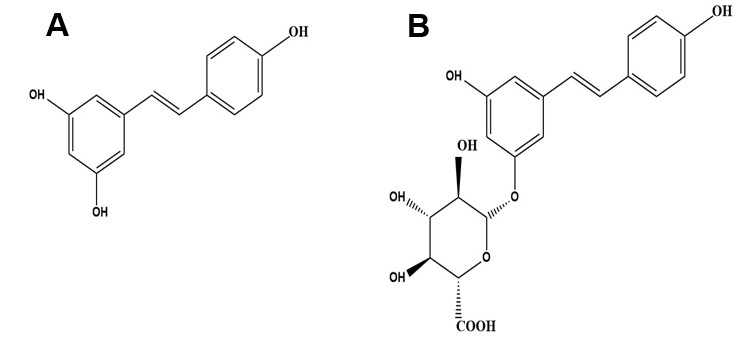
- Figure 1. Structures of (A) trans-resveratrol and (B) trans-resveratrol 3-O-β-D-glucuronide the conjugated derivative of resveratrol.
- Resveratrol production by currently cultivated gourmet and medicinal mushrooms was initially not considered possible. A publication by Gil-Ramirez (2016) argued that resveratrol, a class of non-flavonoid stilbene polyphenol, as well as other flavonoid-type molecules, are not synthesized in basidiomycetes as the enzymatic pathways appeared to not be encoded in the respective genomes (Figure 2). This was shown not to be the case for the synthesis of flavonoids, and several investigators described the presence of the requisite gene sequences (Mohanta et al., 2020; reviewed by Pukalski and Latowski, 2022). Not surprisingly, homologs of enzymes present in plants were notable in endophytes such as chalcone synthase (a polyketide synthase class of enzyme) to complement the plant encoded homolog stilbene synthase (Che et al., 2016). An extensive phylogenetic relationship of chalcone and polyketide synthases was noted across multiple genera of species of plants and fungi (Che et al., 2016). Complementing this, we now specifically identified and assessed the production of resveratrol in Hericium erinaceus in this publication. The notable benefit of Hericium-produced resveratrol would be the industrial production of this mushroom to complement the other numerous beneficial secondary metabolites produced by this species.Methods
Hericium erinaceus cultivation and substrate preparation
The Hericium cultivation substrate was prepared as described previously (Merante et al., 2024) with modifications as follows. Hardwood sawdust was enriched with 10% wheat bran, 1% calcium carbonate, and 1% calcium sulfate. A laboratory scale substrate preparation consisted of 1800 g hardwood sawdust, 200 g wheat bran, 20 g calcium carbonate (CaCO3), 20 g calcium sulfate (CaSO4), and 4000 g water supplemented with organic acids at the following concentrations: 559 μM malic acid (300 mg/batch), 260 μM citric acid (200 mg/batch), 233.4 μM calcium pyruvate (200 mg/batch), and 142 μM ascorbic acid (100 mg/batch) resulting in a final pH of 5.5. Approximately 600 g of the prepared substrate was transferred to 1000 mL polypropylene containers for sterilization. The containers were prepared in advance to possess two 6.5 mm holes (Figure 3) which were sealed with heat-resistant masking tape during autoclaving and substrate colonization. When the substrate was fully colonized, the ports were opened and the containers moved into an environmental chamber to stimulate fruiting (Figure 3). This arrangement permitted side fruiting of the mushroom and subsequent simplified collection of the fruiting body. 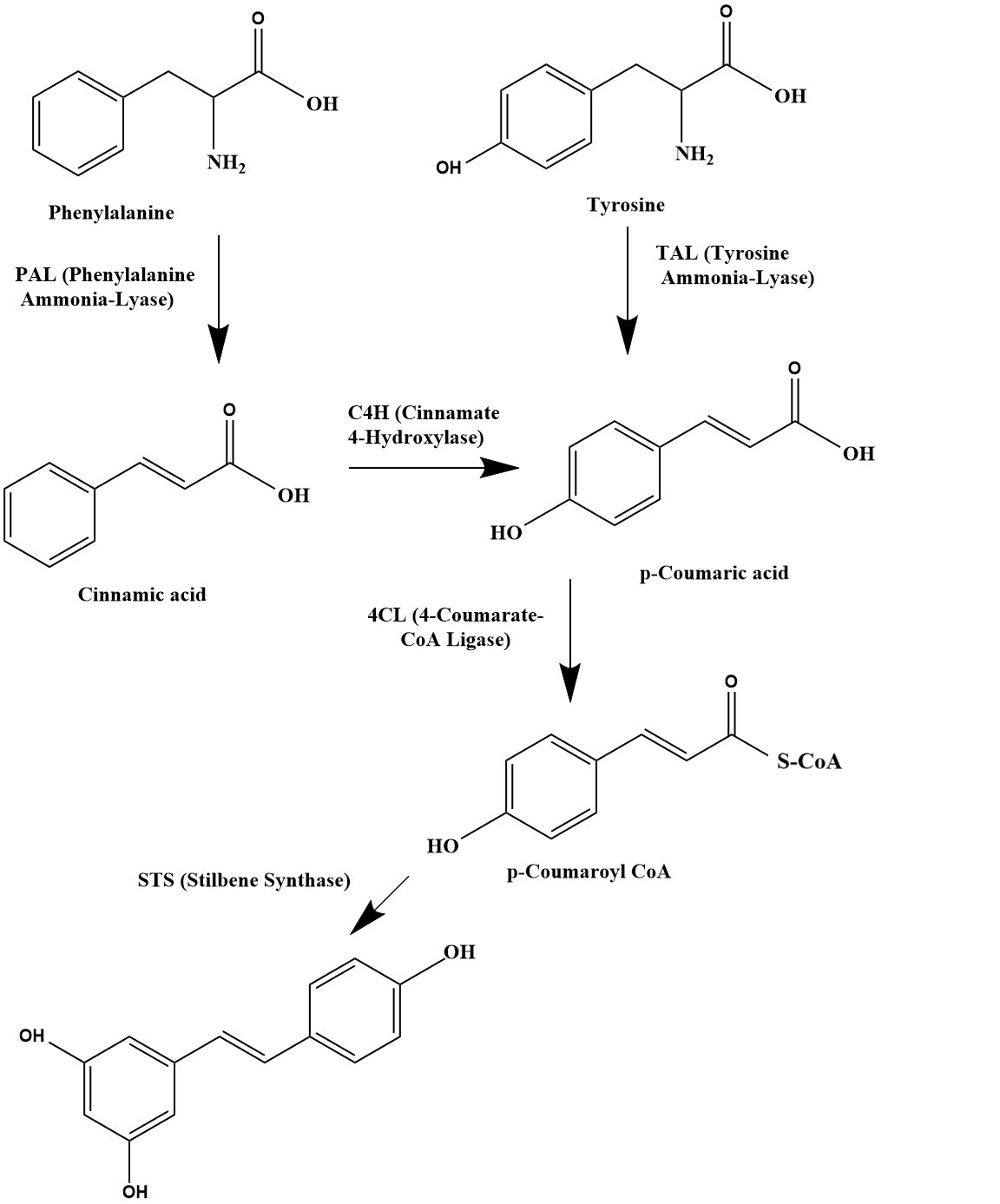
- Figure 2. Resveratrol biosynthetic pathway as observed in plants and endophytic fungi.
- Extraction of Hericium erinaceus fruiting bodies
Hericium mushroom fruiting bodies were lyophilized overnight at -88 °C under a vacuum of 0.006 Torr, then ground into a powder using a mortar and pestle. Approximately 100 mg of this powder was added to 10 mL of 70% or 95% ethanol, which was then placed on a tube rotator overnight to extract the contents. Extracts were filtered through a 0.22 μm syringe filter prior to LC-MS/MS analysis. In addition, 100 μL of a 1 mg/mL resveratrol standard was added to 900 μLof fruiting body extract to serve as a spiked internal standard for approximating resveratrol content.LC-MS/MS metabolomics methodology
LC-MS analysis was conducted on a ZenoToF 7600 (Sciex) coupled to a UPLC M-class system (Waters). Compounds were separated using one analytical column Kinetex 2.6 μm F5 100 Å, 150 × 0.3 mm. Samples were harvested and brought to the MS Facility at YSci core in 95% ethanol, further diluted 2 fold in H2O 0.1% FA (formic acid) in order to keep organic solvent content at 50% maximum and to avoid signal splitting and loss due to early elution of organic solvent. Solvent used with the UPLC were H2O 0.1% FA as solvent A and MeCN (acetonitrile) 0.1% FA as solvent B. An optimized volume of 3 μL was picked up from samples. Flow rate was kept at 8 μL/min. Gradient started at 1% B at 0 min and kept at 1% B for 1 min to 50% at 46 min then to 50% B at 46 min then to 100% B at 47 min and kept at 100% B for 2 min, then 1% B at 50 min and left at 1% B for 3 min until 53 min. Source voltage was kept at 5 500 V with a source temperature of 150°C and a column temperature of 50°C. MS parameters were adjusted to maximize the number of hits to take advantage of the ZenoToF 7600’s speed of acquisition for untargeted analysis of metabolites. Time spent on each MS scan was 0.1 s with a mass range of 100 - 1000 thomson (Th) and time spent on each MS/MS scan was 0.005 s with a mass range of 80 - 1000 Th. 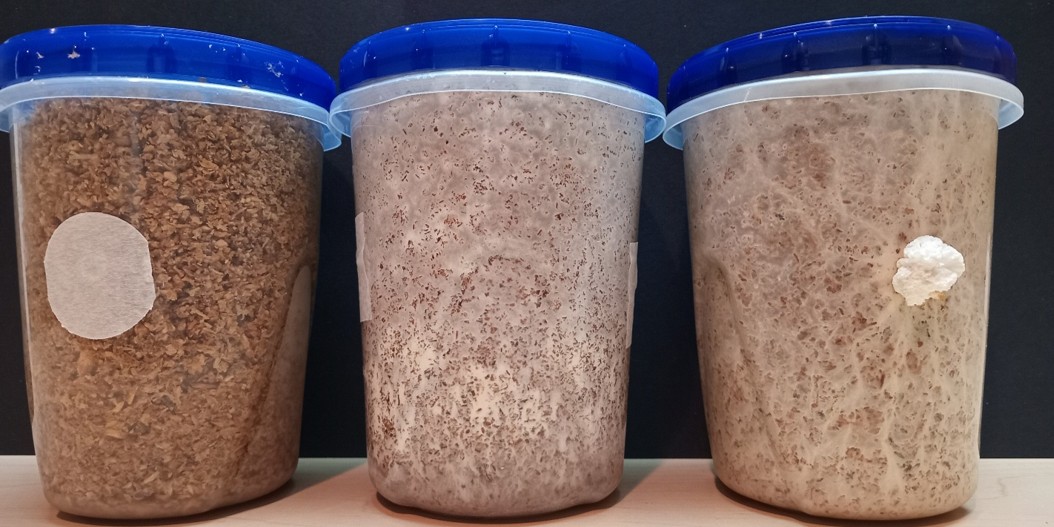
- Figure 3. Examples of: A) Sterilized laboratory scale prepared cultivation substrate with a port patch. The substrate was surface inoculated with Hericium erinaceus mycelium derived from fully colonized malt agar media. A 2 cm2 block of mycelium was transferred under sterile conditions to the surface of the substrate to permit gradual colonization; B) A fully colonized container ready for patch removal and placement into an environmental chamber to induce fruiting; C) Emerging primordium following exposure of the port area to the increased oxygenation following patch removal.
- DPPH Antioxidant Assay MethodologySince resveratrol is known to have high antioxidant potential (Salehi et al., 2018), an antioxidant assay using DPPH (2,2-Diphenyl-1-picrylhydrazyl; Figure 4) was performed on Hericium fruiting body extracts to determine its antioxidant capacity. Pure resveratrol dissolved in 95% ethanol was used for the standards, and DPPH reagent dissolved in methanol was freshly prepared at a working concentration of 500 μM on the day of the experiment. Hericium extracts were prepared as indicated above.Standards and samples were first loaded onto a 96-well plate (50 μL each) before adding 50 μL of DPPH reagent to each well, which was performed using a multichannel pipette. The plate was then covered and placed in the dark for 30 minutes before reading the absorbance at 517 nm.The DPPH assay is a quick and popular method for measuring antioxidant capacity, as the compound contains a stable free radical that becomes reduced when it comes in contact with an antioxidant compound. This permits the measurement of the antioxidant capacity, as DPPH in this stable form gives rise to a deep violet color when dissolved in solution (Kedare & Singh, 2011; Gulcin & Alwasel, 2023). When DPPH is mixed with a compound that is able to donate a hydrogen atom, the molecule is reduced, resulting in the loss of the deep violet color. Therefore, the weaker the violet color, the higher the antioxidant capacity of the compound being tested.Results
Cultivation of Hericium erinaceus using a container port methodThe introduction of ports on the cultivation container (Figure 4) enabled the facilitated formation of the Hericium fruiting body in a sustainable and efficient manner by permitting the repeated re-use of the polypropylene containers in a workflow conducive to full mushroom development (Figure 5). The use of only two ports per growing vessel allowed for market-sized mushrooms to be obtained while minimizing substrate-evaporative water loss and potential exposure to contaminating weed fungi. The port method was also determined to be feasible for fostering Oyster mushroom (Pleurotus ostreatus) development (data not shown) and may be suitable for other species. The lowered pH of the supplemented substrate fostered full mycelium colonization while potentially inhibiting mold and bacterial contamination. This cultivation method in conjunction with the supplemented, organic acid-containing substrate may contribute to the formation of secondary metabolite production such as trans-resveratrol 3-O-β-D-glucuronide (Figure 1B) not previously noted by other researchers. 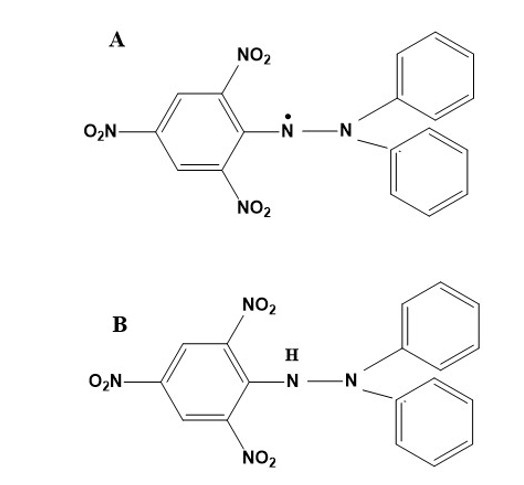
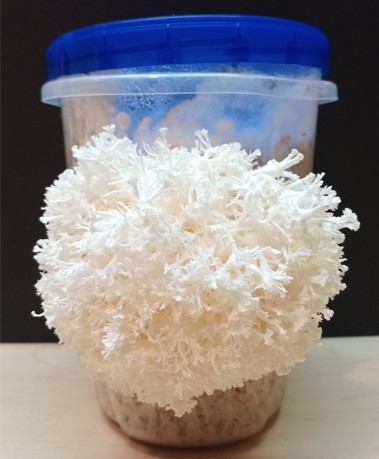 Figure 4. A) DPPH in its stable form (free radical), B) DPPH reduced by the addition of a hydrogen. Adapted from Kedare & Singh, 2011.Figure 5. Hericium erinaceus fruiting body emerging from a side port. In this growing system, two ports were introduced per polypropylene container, each containing approximately 600 g of substrate.
- Functional resveratrol biosynthesis orthologous genes are present in Hericium spp.
To authenticate that the detected resveratrol-derived metabolite was indeed endogenously synthesized in Hericium erinaceus, a genome-wide bioprospecting scan was performed to determine if gene sequences, or corresponding open reading frames (ORFs), were present in this target genome. As shown in Table 1, the first gene product in the metabolic pathway, encoding the enzyme phenylalanine ammonia-lyase was present in Hericium alpestre as represented by NCBI entry A0A4Z0A3S9. Interestingly, also in Hericium alpestre, the second step in the biosynthetic pathway (Figure 3) can be performed by cytochrome P450 onooxygenase encoding the eriC gene sequence (Uniprot entry A0A1V0QSB7), while the third step is performed by an AMP-dependent synthetase/ligase domain-containing protein (Uniprot entry A0A4Z0A2W2) representing orthologous enzymes for cinnamate 4-hydroxylase and 4-coumarate-CoA ligase, respectively. Finally, the orthologous enzyme for stilbene synthase (chacole synthase) is represented as Type I PKS - orsellinic acid synthase (herA; NCBI entry OZ207424.1) in Hericium erinaceus, a gene product shown to permit the synthesis of resveratrol intermediates when heterologously expressed (Han et al., 2023).Hericium erinaceus produces trans-resveratrol 3-O-β-D-glucuronideA nontargeted metabolomics assessment of 95% and 70% ethanol extractable secondary metabolites identified significant quantities of trans-resveratrol 3-O-β-D-glucuronide in a well-isolated region of the liquid chromatography trace exhibiting a retention time of approximately 40.50 minutes, with a peak intensity of 1.6 × 10⁶ CPS (Figure 6). Subsequent mass spectroscopy analysis yielded a peak A0 (monoisotopic peak) at m/z = 427.2590 (Figure 7, Figure 8). The MS/MS spectrum exhibited a parent ion at 427.2608 Th with a mass accuracy of 0.3 Th. Purity, fit, and reversed fit are all at 100% leading to confident identification of the corresponding library match (Resveratrol 3-O-β-D-glucuronide) from the NIST 2017 (National Institute of Standards and Technology) spectral library. 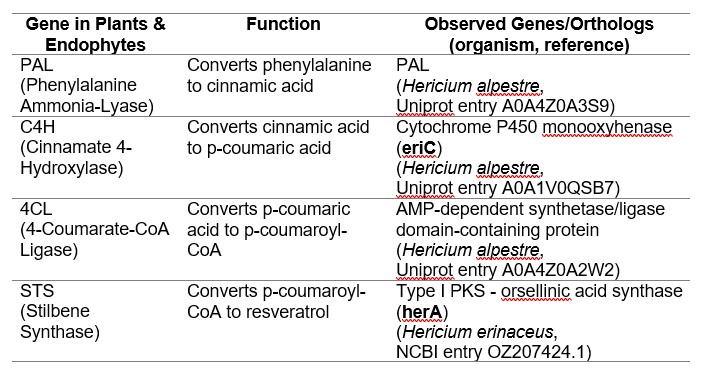
- Table 1. Comparison of resveratrol biosynthesis key genes and corresponding enzymes as represented in plants, endophytes, and Hericium species.
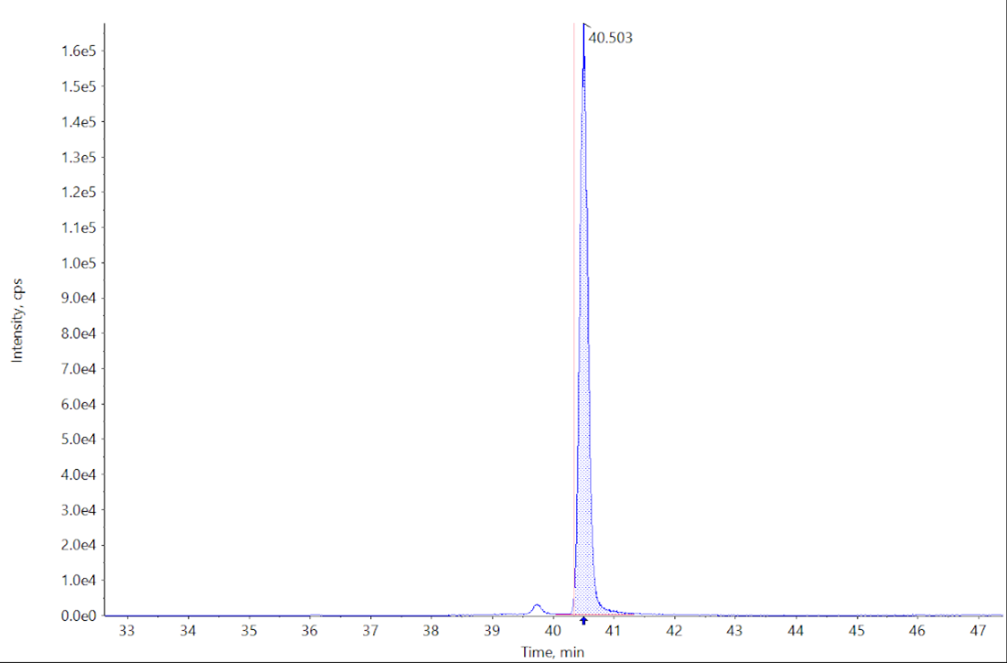
- Figure 6. Liquid chromatography trace showing the elution peak of resveratrol 3-O-β-D-glucuronide at 40.50 minutes, with a peak intensity of 1.6 × 10⁶ CPS. The compound was identified in a 95% ethanol extract of Hericium erinaceus fruiting body.
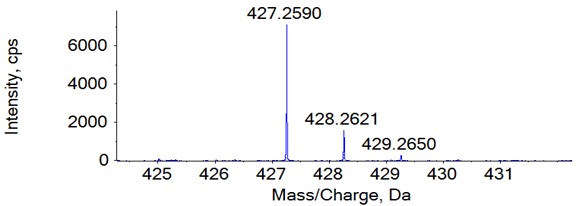
- Figure 7. Recorded MS spectrum shows an isotopic pattern with peak A0 (monoisotopic peak) at m/z = 427.2590 Th and a mass accuracy of 0.1 ppm.
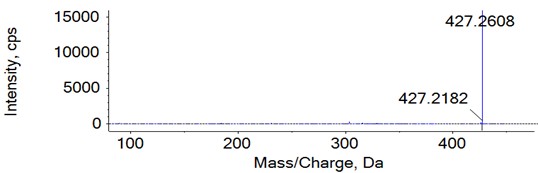
- Figure 8. Recorded MS/MS spectrum shows parent ion at 427.2608 Th with a mass accuracy of 0.3 Th. Purity, fit, and reversed fit are all at 100% leading to confident identification of the corresponding library match (resveratrol 3-O-β-D-glucuronide) from the NIST 2017 (National Institute of Standards and Technology) spectral
library. - Free radical scavenging in HericiumThe percent radical scavenging activity (% RSA) of the Hericium extracts was determined to be approximately 35% (Figure 9) which was comparable to the RSA activity of pure resveratrol at a concentration of 31 μg/mL (Figure 10). In addition, the resveratrol equivalent per milligram of freeze-dried fruiting body was determined to be 3.7 μg, or 3.7 mg/g of dry weight equivalence of free radical scavenging activity.trans-Resveratrol 3-O-β-D-glucuronide content in fruiting body extracts via LCMS analysis
The Hericium fruiting body extract was also compared to a duplicate sample spiked with 100 μg of resveratrol, where the area of the peaks for resveratrol obtained from mass specs via LCMS were compared with the trans-resveratrol 3-O-β-D-glucuronide peaks to estimate its concentration. This value was approximated to be 4.45 μg per 10 mg of dry weight, or 445 μg/g for 70% ethanol extracts and 178 μg/g for 95% ethanol extracts. This value is quite substantial, as a study performed by Akyüz et al. (2012) also looked at resveratrol content in Pleurotus mushrooms, whereby the resveratrol content ranged from 0.25-0.75 μg/g of dried mushroom fruiting body. In other foods such as grape skins and blueberries, the resveratrol content was found to be 5-10 μg/g in grape skins and 0.03-0.06 μg/g in blueberries (Ispiryan et al., 2024). Resveratrol was also present in foods such as wine (1.04x10⁻⁴ - 3.01x10⁻² μg/mL), chocolate (3.99x10⁻⁴ μg/g), and seeds/nuts (2.07x10⁻⁴ - 1.13x10⁻³ μg/g) but at much lower concentrations (Rothwell et al., 2013). 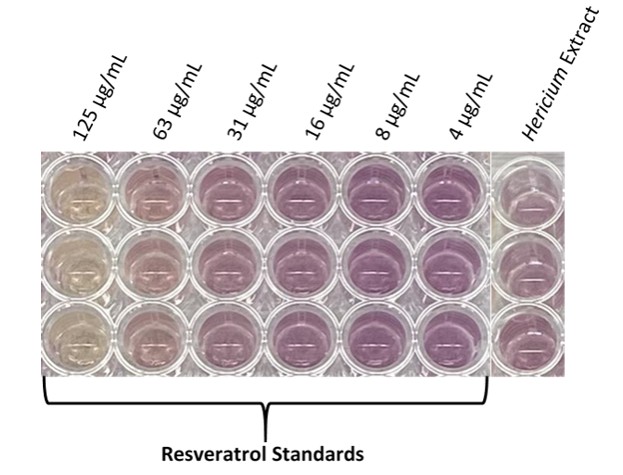 Figure 9. DPPH Assay Results of Resveratrol Standards and Hericium Fruiting Body Extracts. Triplicates were prepared, where 50 μL of each standard/sample was reacted with 50 μL of DPPH reagent. Contents were incubated in the dark for 30 minutes before reading absorbances at 517 nm. Color of the reacted fruiting body extract is comparable to the color of the resveratrol standard at a concentration of 31 μg/mL.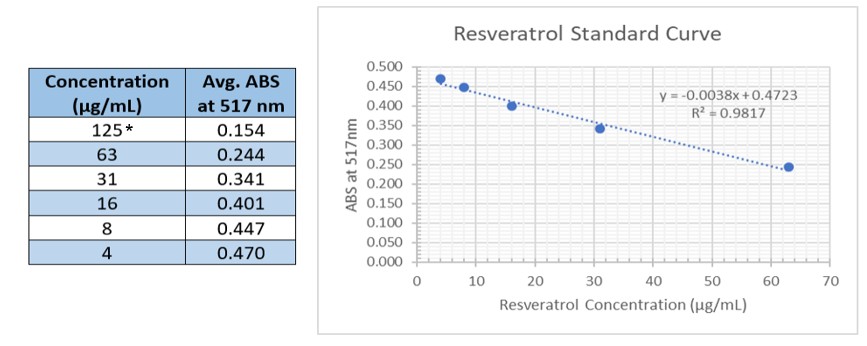
- Figure 10. Absorbances of Resveratrol Standards via DPPH Free Radical Scavenging Assay and Standard Curve. (*First data point omitted from graph to a obtain better linear fit).
- Discussion
The identification and quantification of trans-resveratrol 3-O-β-D-glucuronide in Hericium erinaceus extracts was significant as this secondary metabolite further contributes to the proliferating list of beneficial compounds produced by this nutraceutical species. The presence of the glucuronide conjugate was preferable as this derivative augments the solubility and bioavailability of this desirable molecule. In addition to fostering life extension and health span promoting activities, the approximate concentration of antioxidants determined in extracts is substantial at 3.7 mg resveratrol equivalents per gram of dry weight. Collectively resveratrol-type molecules contribute to the high free radical scavenging pool of compounds present in Hericium, which compares favorably to the levels observed in grape skins (50-100 μg/g; Li et al., 2006) and is quite high when compared to literature values for other basidiomycetes such as Pleurotus eryngii var. eryngii at 0.25 μg/g; (dry weight), Agaricus bisporus at 0.50 μg/g; (dry weight), and Pleurotus florida: 0.75 μg/g; (dry weight) (Akyüz et al., 2012). In part, the concentration observed may be related to the cultivation conditions and the fact that the fruiting body was collected in the primordium stage prior to spore production. This early-stage cultivation strategy may augment the functional food and nutraceutical qualities of the mushroom, and derived extracts have been shown to foster longevity and improved neuronal plasticity (Corana et al., 2019; Roda et al., 2022). Interestingly, production and ultimately concentrations of resveratrol and its derivatives may be further influenced by substrate composition. For example, Sevindik et al., (2024) detected resveratrol in Hericium at a concentration of 9.5 μg/g but the glucuronide derivative was not noted. This may reflect the cultivation conditions or the extraction methodology utilized by Sevindik et al., as Soxlet refluxing was used for extraction optimization whereby mild room temperature extraction was employed by us.The resveratrol derivative noted favorably contributes to the significant free radical scavenging activity noted in the mushroom fruiting body extract and complements other potent free radical scavenging compounds reported in this species (Jahedi et al., 2025). Such compounds contribute to the desirable anti-aging, anti-frailty, and cognitive decline prevention molecules present in Hericium (Kondoh et al., 2024).Collectively, the identification of trans-resveratrol 3-O-D-β-glucuronide in Hericium erinaceus under the cultivation conditions delineated offers a further novel, value-add, secondary metabolite for cultivators, contributing to the growing list of favorable secondary metabolites present in this remarkable species of basidiomycete mushroom.Acknowledgments
We wish to thank the continual support offered by Mr. James Christopher Cooper, Laboratory Technologist, Seneca Centre for Innovation in Life Sciences (SCILS) and Ms. Paola Battiston, Chair, School of Biological Sciences and Applied Chemistry, Seneca Polytechnic, Toronto Ontario.Conflicts of Interest
The authors state that they have no conflicts of interest to declare related to this research. References
Abdelkader, M.-A.E., Mediatrice, H., Lin, D., Lin, Z. & Aggag, S.A. (2024). Mitigating Oxidative Stress and Promoting Cellular Longevity with Mushroom Extracts. Foods, 13, 4028.
Abo-Kadoum, M.A., Abouelela, M.E., Al Mousa, A.A., Abo-Dahab, N.F., Mosa, M.A., Helmy, Y.A., & Hassane A.M.A. (2022). Resveratrol biosynthesis, optimization, induction, bio-transformation and bio-degradation in mycoendophytes. Front. Microbiol. 13,1010332.
Akyüz, M. Onganer, A.N. Erecevit, P., & Kirbag, S. (2012). Flavonoid contents and 2,2-diphenyl-1-picryhydrazyl radical scavenging activity of some edible mushrooms from Turkey: A. bisporus and pleurotus Spp. Current Topics In Nutraceutical Research, 10(2), 133-136.
Ardehjani, N.A., Agha-Hosseini, M., Nashtaei, M.S., Khodarahmian, M., Shabani, M., Jabarpour, M., Fereidouni, F., Rastegar, T., & Amidi, F. (2024). Resveratrol ameliorates mitochondrial biogenesis and reproductive outcomes in women with polycystic ovary syndrome undergoing assisted reproduction: a randomized, triple-blind, placebo-controlled clinical trial. Journal of Ovarian Research, 17(1), 143.
Becker, J.V., Armstrong, G.O., van der Merwe, M.J., Lambrechts, M.G., Vivier, M.A., & Pretorius, I.S. (2003). Metabolic engineering of Saccharomyces cerevisiae for the synthesis of the wine-related antioxidant resveratrol. FEMS Yeast Research, 4(1), 79-85.
Bonkowski, M.S., & Sinclair, D.A. (2016). Slowing ageing by design: the rise of NAD and sirtuin-activating compounds. Nature reviews Molecular cell biology, 17(11), 679-690.
Che, J., Shi, J., Gao, Z., & Zhang, Y. (2016). Transcriptome Analysis Reveals the Genetic Basis of the Resveratrol Biosynthesis Pathway in an Endophytic Fungus (Alternaria sp. MG1) Isolated from Vitis vinifera. Front. Microbiol. 7, 1257. doi: 10.3389/fmicb.2016.01257
Chalal, M., Klinguer, A., Echairi, A., Meunier, P., Vervandier-Fasseur, D., & Adrian, M. (2014). Antimicrobial activity of resveratrol analogues. Molecules, 19(6), 7679-7688.Chu, M., Khan, R. D., Zhou, Y., Agar, O. T., Barrow, C. J., Dunshea, F. R., & Suleria, H.A.R. (2023). LC-ESI-QTOF-MS/MS characterization of phenolic compounds in common commercial mushrooms and their potential antioxidant activities. Processes, 11(6), 1711-1723.Cui, B., Wang, Y., Jin, J., Yang, Z., Guo, R., Li, X., Yang, L., & Li, Z. (2022). Resveratrol treats UVB‐induced photoaging by anti‐MMP expression, through anti‐inflammatory, antioxidant, and antiapoptotic properties, and treats photoaging by upregulating VEGF‐B expression. Oxidative medicine and cellular longevity, 2022(1), 6037303.Darlami, O., & Shin, D. (2021). Total Synthesis of Resvebassianol A, a Metabolite of Resveratrol by Beauveria bassiana. Antioxidants, 10, 1509.Dwibedi, V., & Saxena, S. (2020). In vitro anti-oxidant, anti-fungal and anti-staphylococcal activity of resveratrol-producing endophytic fungi. Proceedings of the National Academy of Sciences, India Section B: Biological Sciences, 90, 207-219.Dwibedi, V., Rath, S.K., Prakash, R., & Saxena, S. (2021). Response surface statistical optimization of fermentation parameters for resveratrol production by the endophytic fungus Arcopilus aureus and its tyrosinase inhibitory activity. Biotechnology Letters, 43, 627-644.Galiniak, S., Aebisher, D., & Bartusik-Aebisher, D. (2019). Health benefits of resveratrol administration. Acta biochimica polonica, 66(1), 13-21.Gao, X., Huo, H., Bao, H., Wang, J., & Gao, D. (2024). Changes of Active Substances in Ganoderma lucidum during Different Growth Periods and Analysis of Their Molecular Mechanism. Molecules, 29, 2591.- Gil-Ramírez, A., Pavo-Caballero, C., Baeza, E., Baenas, N., Garcia-Viguera, C., Marín, F. R., & Soler-Rivas, C. (2016). Mushrooms do not contain flavonoids. Journal of functional foods, 25, 1-13.Gulcin, İ. & Alwasel, S.H. (2023). DPPH Radical Scavenging Assay. Processes, 11(8), 2248.Han, H., Yu, C., Qi, J., Wang, P., Zhao, P., Gong, W., Xie, C., Xia, X., & Liu, C. (2023). High-efficient production of mushroom polyketide compounds in a platform host Aspergillus oryzae. Microb Cell Fact, 22(1), 60. doi: 10.1186/s12934-023-02071-9. PMID: 36998045; PMCID: PMC10064546.Ibrahim, G.G., Yan, J., Xu, L., Yang, M., & Yan, Y. (2021). Resveratrol Production in Yeast Hosts: Current Status and Perspectives. Biomolecules, 11, 830.Ispiryan, A., Kraujutiene, I., & Viskelis, J. (2024). Retaining Resveratrol Content in Berries and Berry Products with Agricultural and Processing Techniques: Review. Processes, 12(6), 1216.Jahedi, A., Ahmadifar, S., Mohammadi, R., & Goltapeh, E.M. (2025). The Lignicolous Fungus Hericium erinaceus (Lion's Mane Mushroom): A Promising Natural Source of Antiradical and DPPH Inhibitory Agents. Scientific World Journal, 5964432.
Juan, D.U., Sui, C., Dongsheng, Y., Wenzhong, H.U., Tao, J., & Zhongpin, L. (2023), The Gene of Resveratrol Synthase transformation to Cordyceps militaris. Am J Biomed Sci & Res, 20(4).
Kang, L.Z., Zeng, X. L., Ye, Z.W., Lin, J.F., & Guo, L.Q. (2014). Compositional analysis of the fruiting body of transgenic Flammulina velutipes producing resveratrol. Food chemistry, 164, 211-218.
Kedare, S.B., & Singh, R.P. (2011). Genesis and development of DPPH method of antioxidant assay. Journal of food science and technology, 48(4), 412-422.
Kiselev, K.V. (2011). Perspectives for production and application of resveratrol. Appl. Microbiol. Biotechnol. 90, 417-425.
Kondoh, H., & Kameda, M. (2024). Metabolites in aging and aging-relevant diseases: Frailty, sarcopenia and cognitive decline. Geriatr Gerontol Int., 24 Suppl 1(Suppl 1), 44-48.
Lagouge, M., Argmann, C., Gerhart-Hines, Z., Meziane, H., Lerin, C., Daussin, F., Messadeq, N., Milne, J., Lambert, P., Elliott, P., Geny, B., Laakso, M., Puigserver, P., & Auwerx, J. (2006). Resveratrol improves mitochondrial function and protects against metabolic disease by activating SIRT1 and PGC-1alpha. Cell, 127(6), 1109-22.
Li, X., Wu, B., Wang, L., & Li, S. (2006). Extractable amounts of trans-resveratrol in seed and berry skin in Vitis evaluated at the germplasm level. Journal of agricultural and food chemistry, 54(23), 8804-8811.
Liu, Y., Nan, L., Liu, J., Yan, H., Zhang, D., & Han, X. (2016). Isolation and identification of resveratrol-producing endophytes from wine grape Cabernet Sauvignon. Springer plus, 5, 1-13
Liu, J., Jiao, K., Zhou, Q., Yang, J., Yang, K., Hu, C., Zhou, M., Li, Z. (2021). Resveratrol Alleviates 27-Hydroxycholesterol-Induced Senescence in Nerve Cells and Affects Zebrafish Locomotor Behavior via Activation of SIRT1-Mediated STAT3 Signaling. Oxid Med Cell Longev, 2021, 6673343. 34239694; PMCID: PMC8238615.
Malaguarnera, L. (2019). Influence of resveratrol on the immune response. Nutrients, 11(5), 946.
Merante, F., Fang, D., Hadassa Fernandes Galvao Leite, H., & Hayman, R.B. (2024). Organic Acid and Lipid Supplementation of Basal Cellulosic Substrates for Optimal Solid-State Hericium erinaceus Primordium Development and Mushroom Yield. Japanese Exotic Mushroom Journal (Winter) 2-8.
Mohanta, T.K. (2020). Fungi contain genes associated with flavonoid biosynthesis pathway. Journal of Functional Foods, 68, 103910.
Moon, D.K., Kim, B.G., Lee, A.R., In Choe, Y., Khan, I., Moon, K.M., Jeon, R.H., Byun, J.H., Hwang, S.C., & Woo, D.K. (2020). Resveratrol can enhance osteogenic differentiation and mitochondrial biogenesis from human periosteum-derived mesenchymal stem cells. J Orthop Surg Res, 15(1), 203.
Palacios, I., Lozano, M., Moro, C., D’Arrigo, M., Rostagno, M.A., Martínez, J.A., García-Lafuente, A., Guillamón, E. and Villares, A., (2011). Antioxidant properties of phenolic compounds occurring in edible mushrooms. Food chemistry, 128(3), 674-678.
Pukalski, J., & Latowski, D., (2022). Secrets of flavonoid synthesis in mushroom cells. Cells, 11(19), 3052.
Pyo, I.S., Yun, S., Yoon, Y.E., Choi, J.W., & Lee, S.J. (2020). Mechanisms of aging and the preventive effects of resveratrol on age-related diseases. Molecules, 25(20), 4649.
Rämä, T., & Quandt, C.A. (2021). Improving fungal cultivability for natural products discovery. Frontiers in Microbiology, 12, 706044.
Roda, E., Ratto, D., De Luca, F., Desiderio, A., Ramieri, M., Goppa, L., Savino, E., Bottone, M.G., Locatelli, C.A., & Rossi, P. (2022). Searching for a Longevity Food, We Bump into Hericium erinaceus Primordium Rich in Ergothioneine: The "Longevity Vitamin" Improves Locomotor Performances during Aging. Nutrients, 14(6), 1177.
Rothwell, J.A., Pérez-Jiménez, J., Neveu, V., Medina-Ramon, A., M'Hiri, N., Garcia Lobato, P., Manach, C., Knox, K., Eisner, R., Wishart, D., & Scalbert, A. (2013). Phenol-Explorer 3.0: a major update of the Phenol-Explorer database to incorporate data on the effects of food processing on polyphenol content. Database, 10.1093/database/bat070.
Salehi, B., Mishra, A.P., Nigam, M., Sener, B., Kilic, M., Sharifi-Rad, M., Fokou, P.V.T., Martins, N. & Sharifi-Rad, J., (2018). Resveratrol: A double-edged sword in health benefits. Biomedicines, 6(3), 91.
Sevindik, M., Gürgen, A., Khassanov, V. T., & Bal, C. (2024). Biological activities of ethanol extracts of Hericium erinaceus obtained as a result of optimization analysis. Foods, 13(10), 1560.
Shi, J., Zeng, Q., Liu, Y., & Pan, Z. (2012). Alternaria sp. MG1, a resveratrol-producing fungus: isolation, identification, and optimal cultivation conditions for resveratrol production. Applied microbiology and biotechnology, 95, 369-379.
Sugiyama, M., Kawahara-Miki, R., Kawana, H., Shirasuna, K., Kuwayama, T., & Iwata, H. (2015). Resveratrol-induced mitochondrial synthesis and autophagy in oocytes derived from early antral follicles of aged cows. Journal of Reproduction and Development, 61(4), 251-259.
Vestergaard, M., & Ingmer, H. (2019). Antibacterial and antifungal properties of resveratrol. International journal of antimicrobial agents, 53(6), 716-723.
Wang, J., Cox, D.G., Ding, W., Huang, G., Lin, Y., & Li, C. (2014). Three new resveratrol derivatives from the mangrove endophytic fungus Alternaria sp. Marine drugs, 12(5), 2840-2850.
Yu, W., Zhang, Y., Lu, Y., Ouyang, Z., Peng, J., Tu, Y., & He, B. (2025). Recent research on the bioactivity of polyphenols derived from edible fungi and their potential in chronic disease prevention. Journal of Functional Foods, 124, 106627.
Zhang, X., Wu, Y., Zhang, Y., Yin, X., van Nocker, S., Guo, J., Li, Z., Gao, M., Song, J. & Wang, X. (2022). Identification of potential key genes in resveratrol biosynthesis via transcriptional analyses of berry development in grapevine (Vitis spp.) genotypes varying in trans-resveratrol content. Fruit Research, 2(1), 1-10.


 1-2-13 Honmachi, Komoro city, Nagano prefecture, Japan 384-0026